Day 16 : Sankalpa—Two Ways
“Courage is the most important of all the virtues because without courage, you can't practice any other virtue consistently.” ― Maya Angelou
What makes your resolve, resolution or sankalpa effective is how you interface with it. When the feelings and images of your goal begin to merge, they point to the richness of your intention. As a result, you get a sankalpa that can be clearly stated as a reminder of what your soul truly desires.
There are two ways that a sankalpa can be stated. I have used both methods successfully to fulfill my own intentions.
Method One: An Excited Phone Call
This is the “phone call” or“new school” way, which in my opinion has the capacity to hold more bhavana, the feeling, plus the emotional essence of your desire.
I will use one of my accomplished sankalpas to demonstrate.
One of my most recent goals was to find a home in Minneapolis. As I said in one of the previous posts, it was important for this house to be by the lake, have a fire place and be dog-friendly. To use the first method, imagine getting a phone call from a very good friend of yours who perhaps knows about your goal and is supportive of it.
Friend: “How are you doing?”
Me: ”I love my new home… It’s by the lake, has a fire place and is dog friendly!”
Your answer will contain the emotion [I love] as well as your sankalpa [my new home…by the lake, has a fire place and is dog friendly].
A few pointers on this first method:
- Include the emotion. Here are some examples: I am blessed; I feel fantastic; I have all I need; My energy is back!
- State your sankalpa in the present or past, meaning that it sounds like you have achieved your goal. “I found a new house”; “I cherish the time I spend with my family”; “I completed my final paper, and have graduated!”
- You want to stay away from -ing verbs, for example: I am completing my final paper and will be graduating.
- Let it be in your regular language — using words that you wouldn't actually say can make it inauthentic, and less useful. As a note, if English is not your mother tongue, then use the language you are most confident and comfortable in.
Method Two: Empowerment-Directional-Disciplined
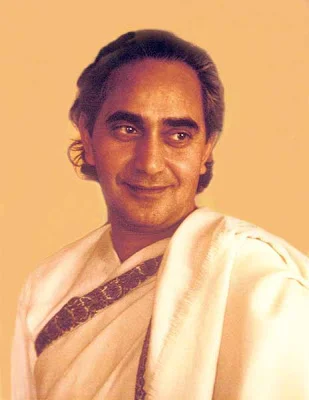
The second is the Swami Rama or “old school” way, which has more of a disciplined-directional attitude. It comes from this quote by Rama: (2003) “The simple method to enlightenment is to first know yourself. Learn to work with yourself; don’t give up in that. Give up on anything else, but don’t give up that goal. Remind yourself, ‘I will continue to work with myself. I can do it, I will do it, and I must do it.’ Remember these three sentences: ‘I can do it. I will do it, and I must do it.’”
I find this way to be very simple and to the point. When I first started to look for my home I used this method: “I can find my home by the lake, I will find my home by the lake, I must find my home by the lake.”
Avoid using the future tense, as there is less shakti or power within the statement.
This method empowers the commitment we have made to ourselves (“ I can”), assures us of the goal (“i will”), and reminds us that failure is not an option (“I must”). (Stryker, 2015)
In the next few days we will be doing two creative projects using both of these methods. You can do them both or choose which one you prefer. Doing both will allow you a greater bond with that goal, as well as help you to finalize the wording if you are still word-smithing your sankalpa.
*Note on Sankalpas*
- A sankalpa states a goal that can be reached in 6 to 18 months.
- Make sure you have clarity around how you know your intention has been fulfilled.
- ,If this is your first time setting a measurable sankalpa, please remember to choose a goal that is on the simpler side.
Here are a few examples from The Four Desires workbook by Rod Stryker
- I'm so excited! I just finished leading my first 8-week life enhancement series.
- My clients are feeling empowered and thriving, and I am feeling fulfilled and living my dharma.
- The home remodel is complete! I have the stability and resources to deepen my practice.
- I can publish my first book by next Fall; I will publish my first book by next Fall; I must publish my first book next Fall.