Day 12: Lakshmi, Goddess of Abundance
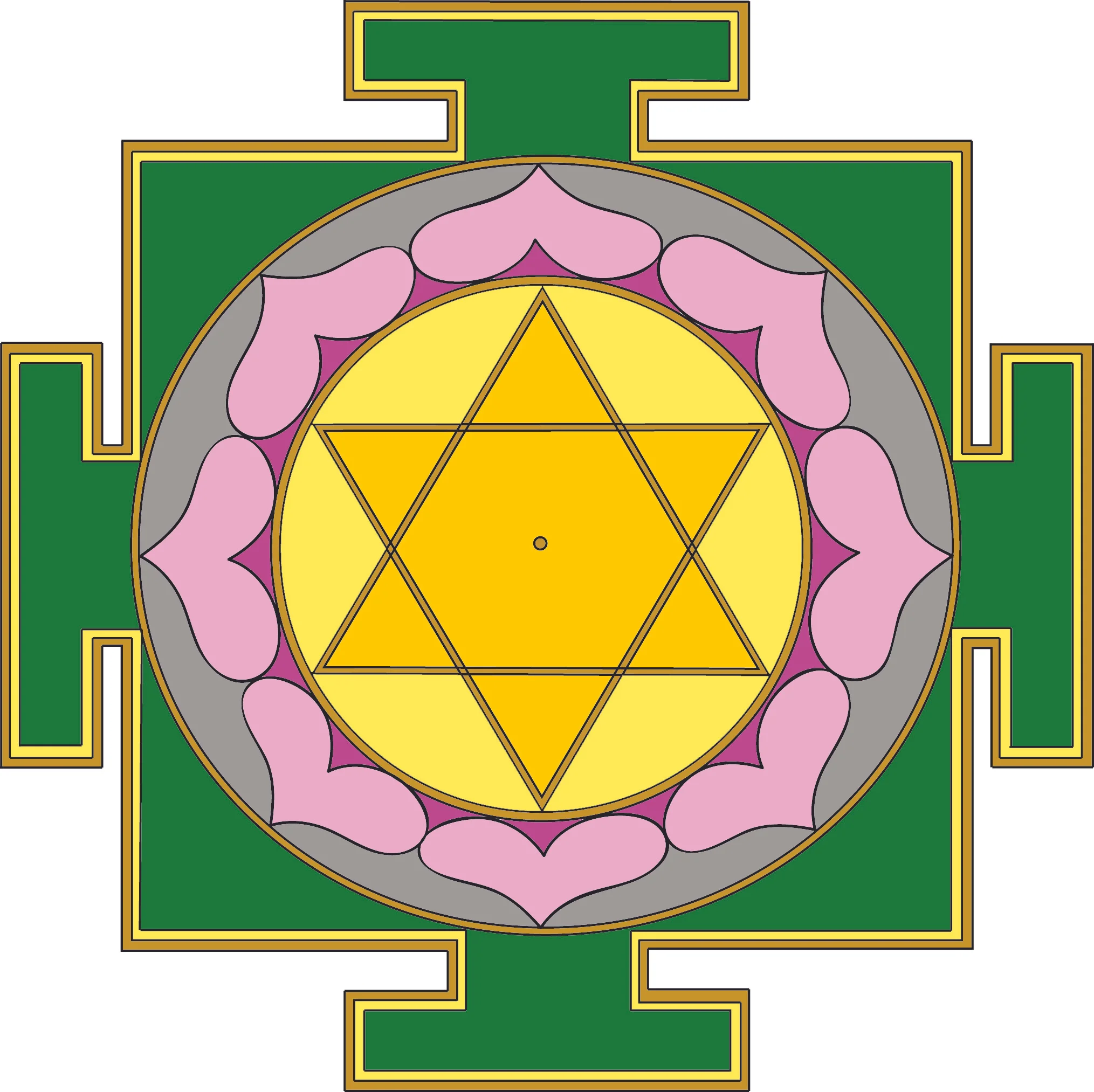
Lakshmi is the goddess of abundance, beauty, fertility, devotion, gratitude, and wealth. Her hands represent the four puruṣārthas, the 4 Desires: Dharma, Artha, Kama, and Moksha. Lakshmi, like the Roman Venus and the Greek Aphrodite, was born from the depths of the ocean on a lotus. Her birth story reminds us that Lakshmi comes from one of the most abundant parts of nature—water is life giving, sensual, nourishing, and supportive.
In order to transition from our collages to the next steps of this creative process, I thought it would be appropriate to honor as well as ask for the blessings and support of Lakshmi.
The Lakshmi yantra is the geometrical representation of her divine essence—the bindu (central point) being the goddess herself. As you color in your Lakshmi yantra let the following questions and your possible responses take a stroll through the mind. To allow those thoughts to travel freely invites the coloring to be a reverential meditation rather than a task to be completed.
Lakshmi asks us to know our own worth
How am I abundant?
Where do I lack abundance (spiritually, emotionally, worldly)?
Where do I desire most wealth?
What am I grateful for?
How do I express that gratitude?
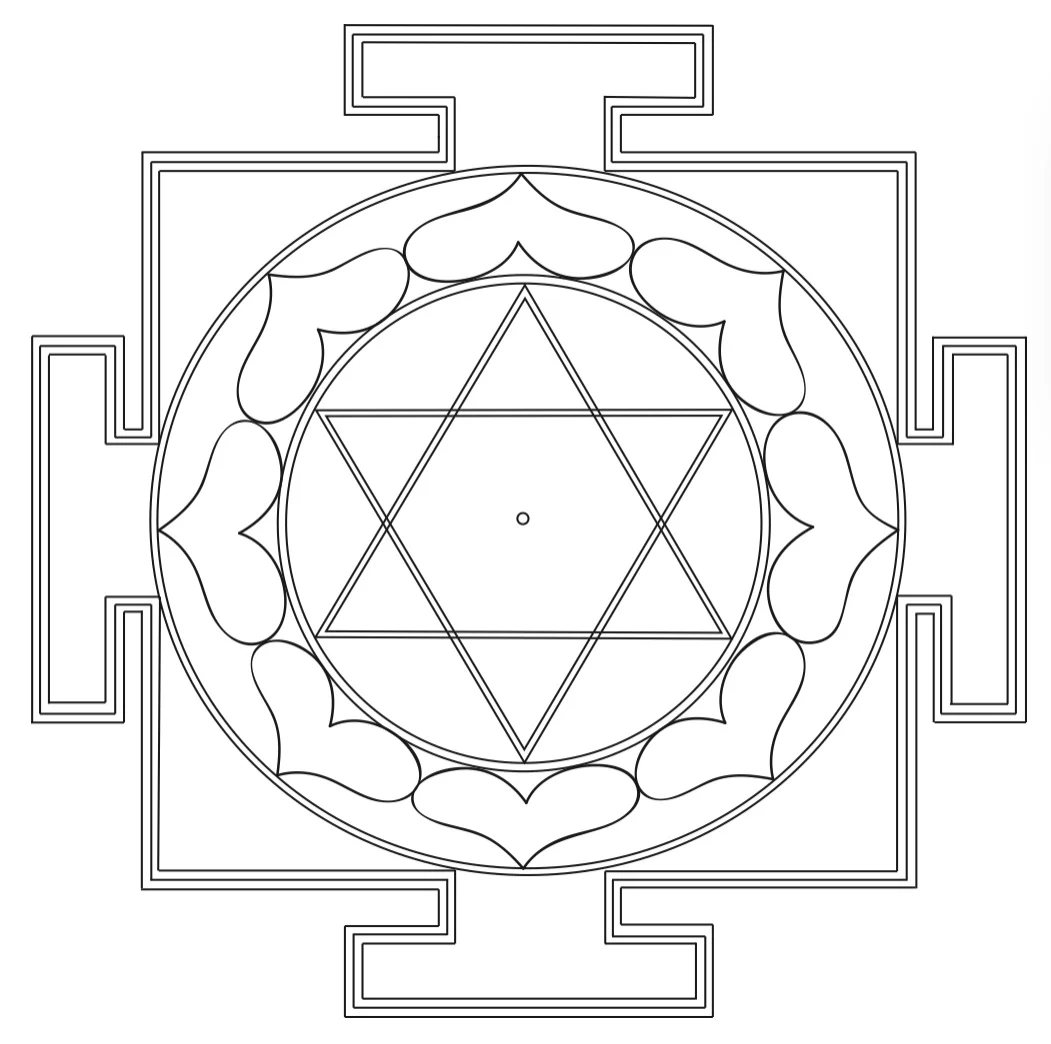
The prescribed colors of the Lakshmi yantra (in the Johari tradition) are described in the following palette:
- First Bhopur Line- Gold
- Second Bhopur Line- Lemon yellow
- Bhopur (gates)- Grass green
- First ring- Gold
- Outer petals- Silver
- Petals- Light pastel pink
- Inner petals- Darker pink
- Inner ring- Gold
- Inner circle- Lemon yellow
- 6-pointed lined star- Gold
- Inner 6-pointed star- Saffron
Day 11: Simply Divine
“There is a loneliness more precious than life. There is a freedom more precious than the world. Infinitely more precious than life and the world is that moment when one is alone with God.”
—Rumi
As you continue your moksha mandala today, and if possible throughout the whole day, can you get a little closer to the divine? Your moksha in action is to notice, like Mary Oliver, the divine in the simplest moments of the day. There is no special trick to this exercise, nor a precise way to go about it. Perhaps some of you already notice the divine, but can you witness moksha in those picturesque moments as well as those you’d rather forget.
This kind of awareness will take you back to the exploratory questions and help you redefine your relationship to that which is sacred.Write a poem about it. Take a clean sheet of paper, sit, stand, lie down near your sacred space (the one that’s been charged with your creative energy) and write.
If you need some support or a place to begin, here are two suggestions:
- Like Oliver did in her poem, begin by asking questions related to the experience of moksha in action: noticing the divine in all moments of the day.
- Similar to Rumi, express what it’s like when “one is alone with God.”
Day 10: Moksha Mandala
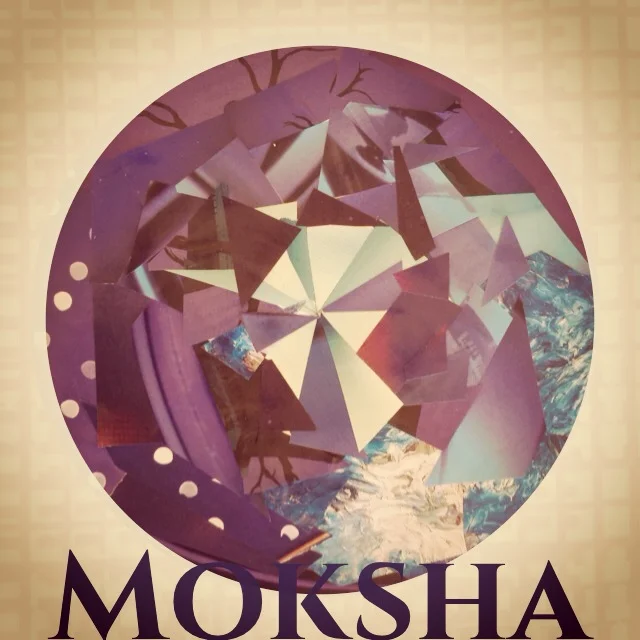
The final desire, moksha, is beyond language and therefore more difficult to talk about. Its mystery is what allows moksha to have such great power. Moksha speaks to para atman, the supreme divinity. It is the desire for liberation and freedom from suffering. Moksha is the motivation to know something greater, yet unknown — beyond.
If we want to be more pragmatic and practical with moksha, we can describe this desire as not wanting to be burdened by that which brings pain, suffering, disappointment or despair.
I offer you this poem by Mary Oliver that, for me, expresses how the sacred and spiritual can be found in any moment as long as one is curious and open to listening.
I don't know where prayers go,
or what they do.
Do cats pray, while they sleep
half-asleep in the sun?
Does the opossum pray as it
crosses the street?
The sunflowers? The old black oak
growing older every year?
I know I can walk through the world,
along the shore or under the trees,
with my mind filled with things
of little importance, in full
self-attendance. A condition I can't really
call being alive
Is a prayer a gift, or a petition,
or does it matter?
The sunflowers blaze, maybe that's their way.
Maybe the cats are sound asleep. Maybe not.
While I was thinking this I happened to be standing
just outside my door, with my notebook open,
which is the way I begin every morning.
Then a wren in the privet began to sing.
He was positively drenched in enthusiasm,
I don't know why. And yet, why not.
I wouldn't persuade you from whatever you believe or whatever you don't. That's your business.
But I thought, of the wren's singing, what could this be
if it isn't a prayer?
So I just listened, my pen in the air.
Moksha Exploratory Questions
- How would you define freedom?
- How does freedom show up in your life; or how would you like it to?
- What allows you to feel unburdened?
- What is sacred (truth, god, divine) to you?
- What is your relationship to the sacred?
- How does that relationship free you from fear, anxiety, grief, and the pains of life?
Mandala Making
Get all your supplies ready, or at least what you anticipate you will need. The basics are:
- Paper, poster board or cardboard
- Scissors, X-ACTO blade
- Glue
- Magazines, images, old cards
- Embellishments, glitter, string, cord, etc.
- Compass or bowl to make your mandala.
- Take some time to answer the moksha exploratory questions (following) for yourself. You can write them down or just sit with them for a bit to activate the feelings of moksha within before you start your collage.
- In your sacred space, close the eyes and turn inward Remember the answers and feelings that the questions have brought to the surface.
- Scan through the magazines and pull out the images that you are attracted to without thinking about how they will fit together or if they make any sense. Let the images speak to you.
- Cut out your circular mandala from the paper or cardboard to know the size of what you are looking for and how to bring the reverential quality within the circle.
- Look through the images. Decide which ones are most important: the ones that take you to the feelings of liberation, freedom, curiosity…. moksha — the beyond.
- Make fine cuts on the images you have chosen.
- Arrange them inside your mandala to tell the story of what artha means to you. Essentially you are creating an image definition of moksha.
- Glue the images within your mandala.
- Write any thoughts, ideas, other images or references that came up throughout the process. Like I mentioned in the tutorial, I like to keep my journal next to me while I am creating for two reasons. Firstly, to jot down anything that comes up, and secondly, to write things down that will distract me or pull me away from creating. Sometimes I remember I have to finish the laundry or call someone.If it’s going to distract me and it’s not urgent, I write it down to do later.
- Give thanks for the time in your sacred creative space, and add the collage to your altar.
Day 9: Leaping towards Artha TODAY!

"Take the first step in faith. You don't have to see the whole staircase, just take the first step.”
—Martin Luther King Jr.
Enjoy your second day working on your artha mandala. This desire could go either way. You may know exactly what this looks like, or it may be challenging to step into a life that has the possibility of being completely supportive.
For today’s Artha in action, I ask you to move closer towards it. What is it that today you can do that will automatically begin to support your Dharma? If you are not completely certain what that may look like, use your mandala. Look at your Dharma mandala and let it speak to you; notice the images, the feelings, and what it begins to stir within.
Sure, a new car may be an option, but is it an option for you today? I remember having this dilemma as I traveled across the country and literally needed a new car in order to support my business and current move. And it happened! The desire for a car more suitable to my needs definitely came from artha.
How will you take a step, hop, leap, or simple slide towards Artha today?
Aim Your Creative Force TODAY
Chanti
Day 8: Artha Mandala: Supporting Dharma

A monk sips morning tea,
it's quiet,
the chrysanthemum's flowering.
—Basho
Artha is the desire for those things in life that give you the support or the means to fulfill your personal Dharma: money, health, security, food, a home, transportation, and, in my case, a really good winter coat! Artha can be understood as the reservoir or the foundation without which it is difficult or challenging to successfully embody dharma.
We can refer to the Buddha’s begging bowl as a symbol of Artha. The myths tell the story of the Buddha meditating beneath the Bodhi tree, practicing austerities and eating very little. A woman saw him and gave him a golden bowl of milk-rice. He was reluctant to take such a precious gift, however he knew well that the final steps towards enlightenment required more strength. We could argue that the Buddha’s personal dharma was to pass on the teachings — he needed food to attain enlightenment, in order to share those gifts. Legends say that he portioned the rice into 49 equal parts, one for each day until he reached enlightenment.
The next two days we will work on our third collage mandala: Artha. By now you should have the hang of it!
Enjoy the process & Aim your creative force towards wealth (in all forms)!
Chanti
Artha Exploratory Questions
- What does success look like materially?
- What are the external necessities or the means necessary to support your personal Dharma?
- How do you define material success?
- What does optimal health look like?
- What makes you feel safe and supported?
- How do you envision wealth?
Get all your supplies ready, or at least what you anticipate you will need. The basics are:
- Paper, poster board or cardboard
- Scissors, X-ACTO blade
- Glue
- Magazines, images, old cards
- Embellishments, glitter, string, cord, etc.
- Compass or bowl to make your mandala.
- Take some time to answer the artha questions (following) for yourself. You can write them down or sit with them for a bit to activate the feelings of artha within before you start your collage.
- In your sacred space, close the eyes and turn inward. Remember the answers and feelings thatthe questions have brought to the surface.
- Scan through the magazines and pull out the images that you are attracted to, without thinking about how they will fit together or if they make any sense. Let the images speak to you.
- Cut out your circular mandala from the paper or cardboard to know the size of what you are looking for and how to bring the reverential quality within the circle.
- Look through the images. Decide which ones are most important and take you to the feelings artha.
- Make fine cuts on the images you have chosen.
- Arrange them inside your mandala to tell the story of what artha means to you. Essentially you are creating an image definition of artha.
- Glue the images within your mandala.
- Write any thoughts, ideas, other images, or references that came up throughout the process. Like I mentioned in the tutorial, I like to keep my journal next to me while I am creating for two reasons: firstly, to jot down anything that comes up, and secondly, to write things down that will distract me or pull me away from creating. Sometimes I remember I have to finish the laundry or call someone If it’s going to distract me and it’s not urgent, I write it down to do later.
- Give thanks for the time in your sacred creative space, and add the collage to your altar.
Day 7: Walking in your Dharma Shoes
Hi Creatives,
Keep working on your Dharma mandalas, as you bring a little more Dharma into your day!
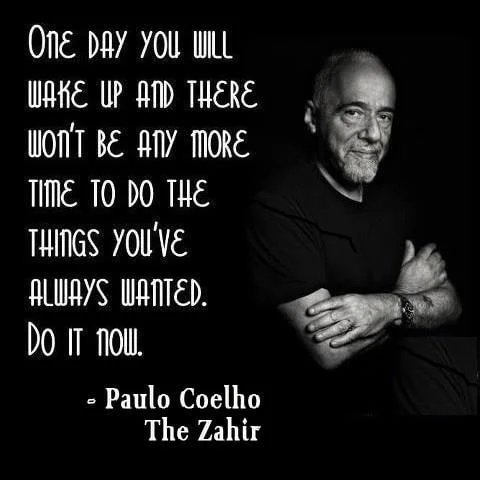
I remember listening to a great interview of one of my favorite authors Pablo Coelho, in which he speaks about how he took a risk and made the conscious decision to live dharmically… at age 40. It exemplifies ritual, creativity and listening to your most intimate and authentic desires and then, running towards them.
Coelho says, “My dream was to be a writer. I was 40 years old, probably too old to change my path. But I said, ‘No. I’m going to change. I’m going to leave everything behind. I’m going to burn my bridges. I’m going to follow my heart from now on, even if I have a price to pay.”’
When I think about the rippling effect of one man’s decision, I must recognize a few things. First, his book The Alchemist played a great part in my life—it connects me to two important people, both who have passed away: a very good friend who introduced me to the book, and my grandfather. After reading the book I found it in Spanish and gave it to my Abuelo. He finished it in just a few hours, then reread it a few more times. My grandfather loved his books so much that they became the only gift I would give him. As soon as a new Coelho book came out, I would buy it and he would devour it within a few hours or days.
One time I gave him the book Eleven minutes, without having read it beforehand. I remember passing by his room asking him how the book was. He said, “fabulous, just fabulous.” When I finally read it for myself I was totally embarrassed: the book was essentially about a prostitute and was heavy on the sex scenes—which didn’t phase my Abuelo at all. He just loved the way Coelho wrote.
My point is that I have precious intimate memories of my own because one man was brave enough to play out his purpose.
Today I invite you to listen to The Alchemy of Pilgrimage, a podcast from On Being with Pablo Coelho and Krista Tippet, on the essence of dharma. Even in an interview you can be touched by someone else living with purpose—it’s awe-inspiring.
Dharma in Action
After listening to the interview, are you inspired to live a little closer to that place of purpose?
Even if you are unsure of what your purpose may be or feel like, can you get a little more curious about it? Is there a way you can express that in your day with the actions you take, the decisions you make?How do you respond and react to life itself?
I know this is not an easy exercise, but just meditating, imagining, and role-playing can be an interesting experience. I am asking you to begin to move towards that light today.
You may then reflect on your day, on the back of your mandala, or in your journal.
Aim Your Creative Force (with purpose)
Chanti
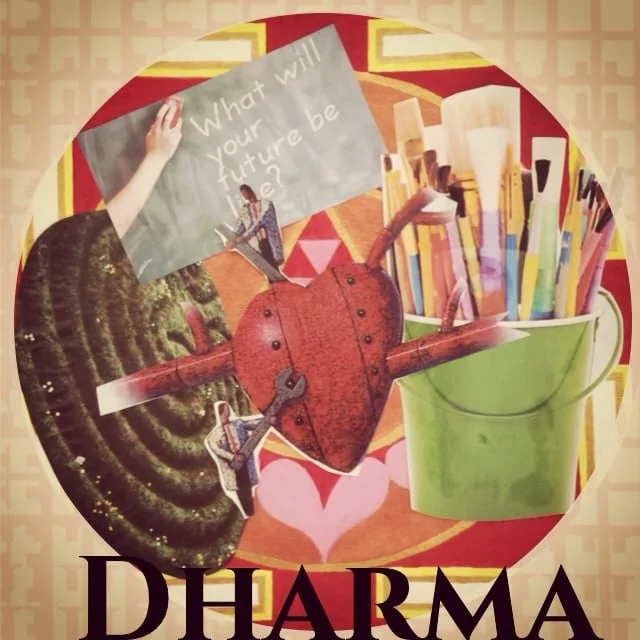
Day 6: Dharma Mandala
“First, become clear what your duty or purpose is in life. Second, learn to love it.”
— Swami Rama
The next two days we will work on our second collage mandala: Dharma.
Dharma is our soul’s purpose which speaks directly to our jiva atman—our individuality. Everyone’s dharma is different and adds to the diversity of the world.
“The root of the word dharma is dri, which means ‘to support’ or ‘to hold up.’” (Stryker, 2011).
When you live in the desire of dharma, all else falls into place because you are supported. There is joy in the most exhilarating as well as in the mundane—to embody your own personal dharma feels like the perfect fit—uniquely you.
Today and tomorrow you will work on the Dharma Mandala. Below are the same directions used in the Kama mandala. I suggest that with each mandala you begin to expand your materials, or try a new technique. For example, changing the size of the mandala will give you a new place to begin. This is where creativity comes alive—in the pulse of spontaneity.
Enjoy the process & Aim your creative force!
Chanti
Dharma Exploratory Questions
- What makes you unique?
- What brings meaning and purpose to your life?
- What does it look like when you follow your heart?
- How does your uniqueness, essence, and authenticity ripple from you out into the world?
- What do you offer the world and how does the world benefit from you?
Collage Mandala
Get all your supplies ready, or at least what you anticipate you will need. The basics are:
- Paper, poster board, or cardboard
- Scissors, or X-ACTO blade
- Glue
- Magazines, images, old cards
- Embellishments, glitter, string, cord, etc.
- Compass or bowl to make your mandala.
- Take some time to answer the dharma exploratory questions (following) for yourself. You can write them down or just sit with them for a bit to activate the feelings of dharma within before you start your collage.
- In your sacred space, close the eyes and turn inward. Remember the answers and feelings that the questions brought to the surface.
- Scan through the magazines. and pull out the images that you are attracted to, without thinking about how they will fit together or if they make any sense. Let the images speak to you.
- Cut out your circular mandala from the paper or cardboard to know the size of what you are looking for and how to bring the reverential quality within the circle.
- Look through the images and decide which ones are most important and take you to the feeling of dharma—your life’s purpose.
- Make fine cuts on the images you have chosen.
- Arrange them inside your mandala to tell the story of what dharma means to you. Essentially you are creating an image definition of dharma.
- Glue the images within your mandala.
- Write any thoughts, ideas, other images or references that came up throughout the process. Like I mentioned in the tutorial, I like to keep my journal next to me while I am creating for two reasons: firstly, to jot down anything that comes up, and secondly, to write things down that will distract me or pull me away from creating. Sometimes I remember I have to finish the laundry or call someone. If it’s going to distract me and it’s not urgent, I write it down to do later.
- Give thanks for the time in your sacred creative space and add the collage to your altar.
Day 5: Embodying Pleasure —Continuation of Kama Mandala
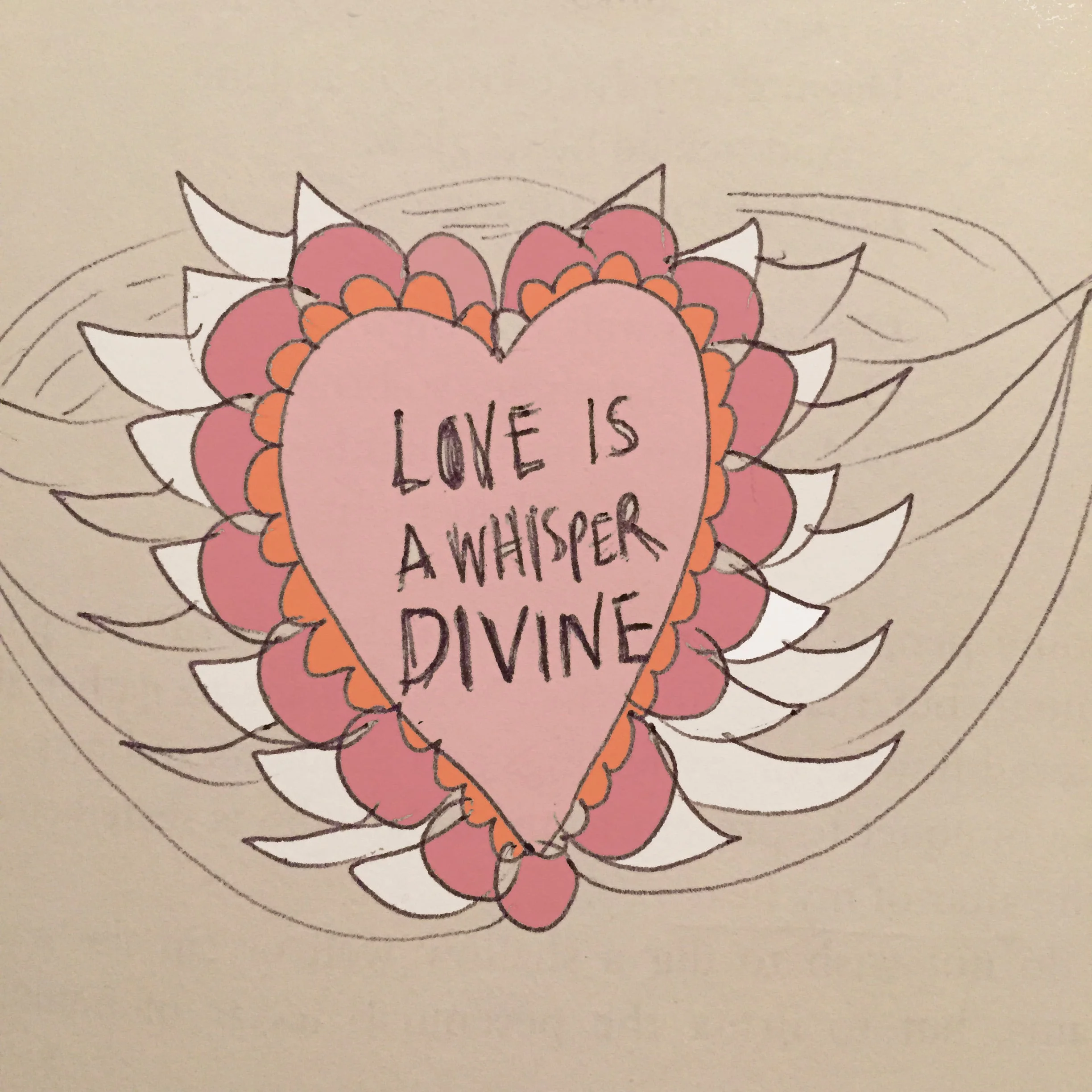
“Love alone is not enough. Without imagination, love stales into sentiment, duty, boredom. Relationships fail not because we have stopped loving but because we first stopped imagining.” ― James Hillman
You may still be in the process of constructing your Kama collage, keep at it. Sometimes it feels good to have 2 [officially allotted] days to work on a project rather than one. I’m going to add a little extra mindfulness for the rest of today—Kama in action.
Kama in Action: How do you embody Kama?
Kama can be explored both internally and externally. I was reminded of the intimacy we can experience with divinity herself. Swami Rama illustrated an image in one of my favorite books, Love Whispers. He says in a dialogue with the divine “in the depths of my heart dwells the eternal spirit of my love, which will one day transmute my whole being in to the golden moments of joy. I have already made it clear that the architect of my philosophy of life is not the knowledge of the mind but a pure vision. Often my soul has experienced the Real and touched the Infinite. My restlessness is for Thy eternal communion.”
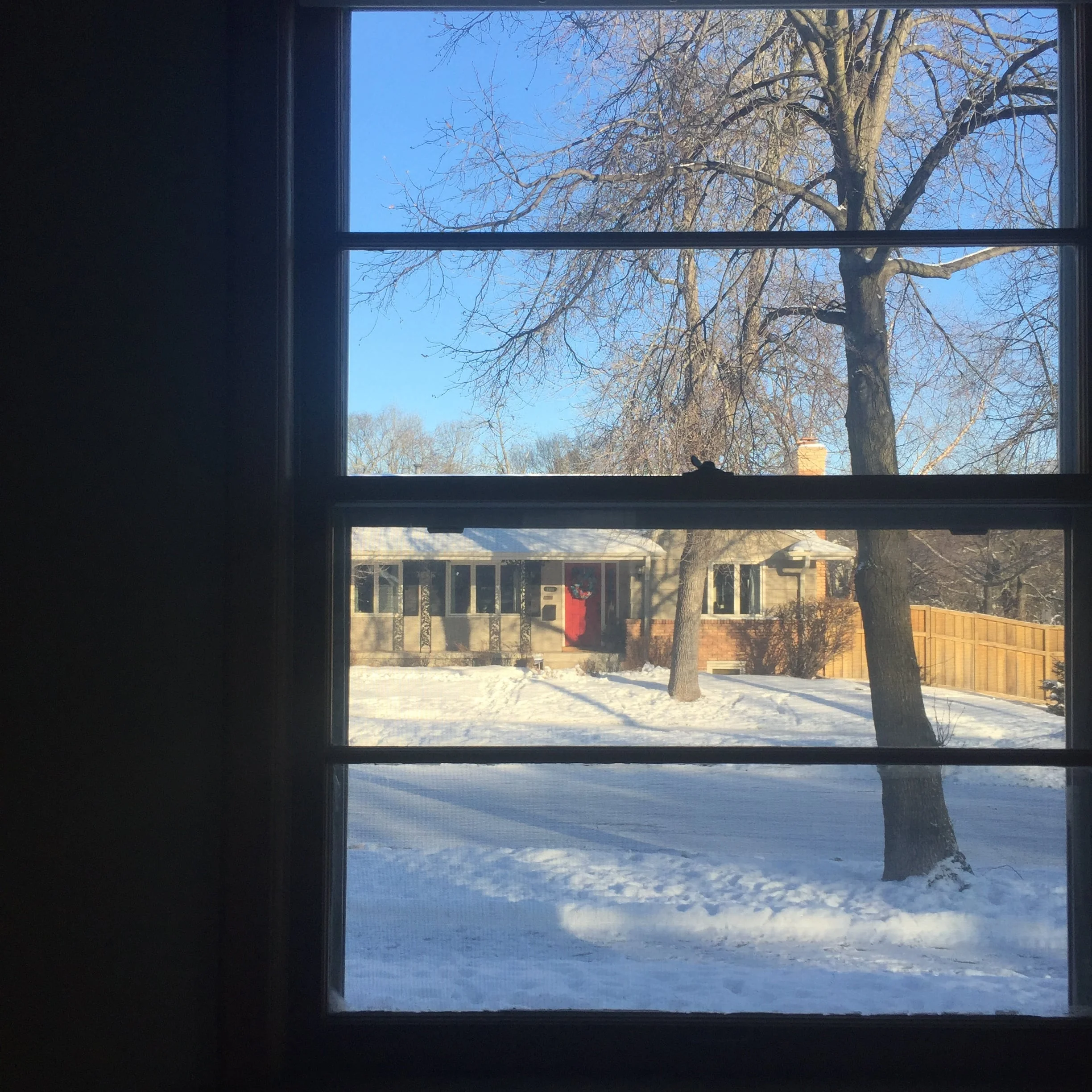
In what ways can you embody Kama a little more today? Take the extra step from the thinking mind to the feeling body. You can look outside your window and think: “Wow, the sun is out, the sky is clear, what a wonderful day for a walk.” The next step would be to embody that feeling of pleasurable joy, and go outside. Our minds/ patterning (or I should say my mind) have a tendency to default to the next few thoughts… “I don’t have enough time. It’s really cold outside. Do I need to get out of these pajamas before going?” Basically, time, expectation, preparation, or whatever the pattern may be, get in the way of pleasure. Override those thoughts and move your body into the space of Kama.
Make any observations in your day when you intentionally set out to have a little more pleasure, beauty, and intimacy. Take note as the day progresses, you may find yourself on “auto pilot” or moving in the opposite direction.
At the end of the day, on the back of your Kama mandala, jot down, draw, or interpret in any way your experience. Distinctly note what it was that brought you pleasure, or what blocked it.
Aim Your Creative Force (with pleasure)
Chanti
Day 4: The Soul's Four Desires
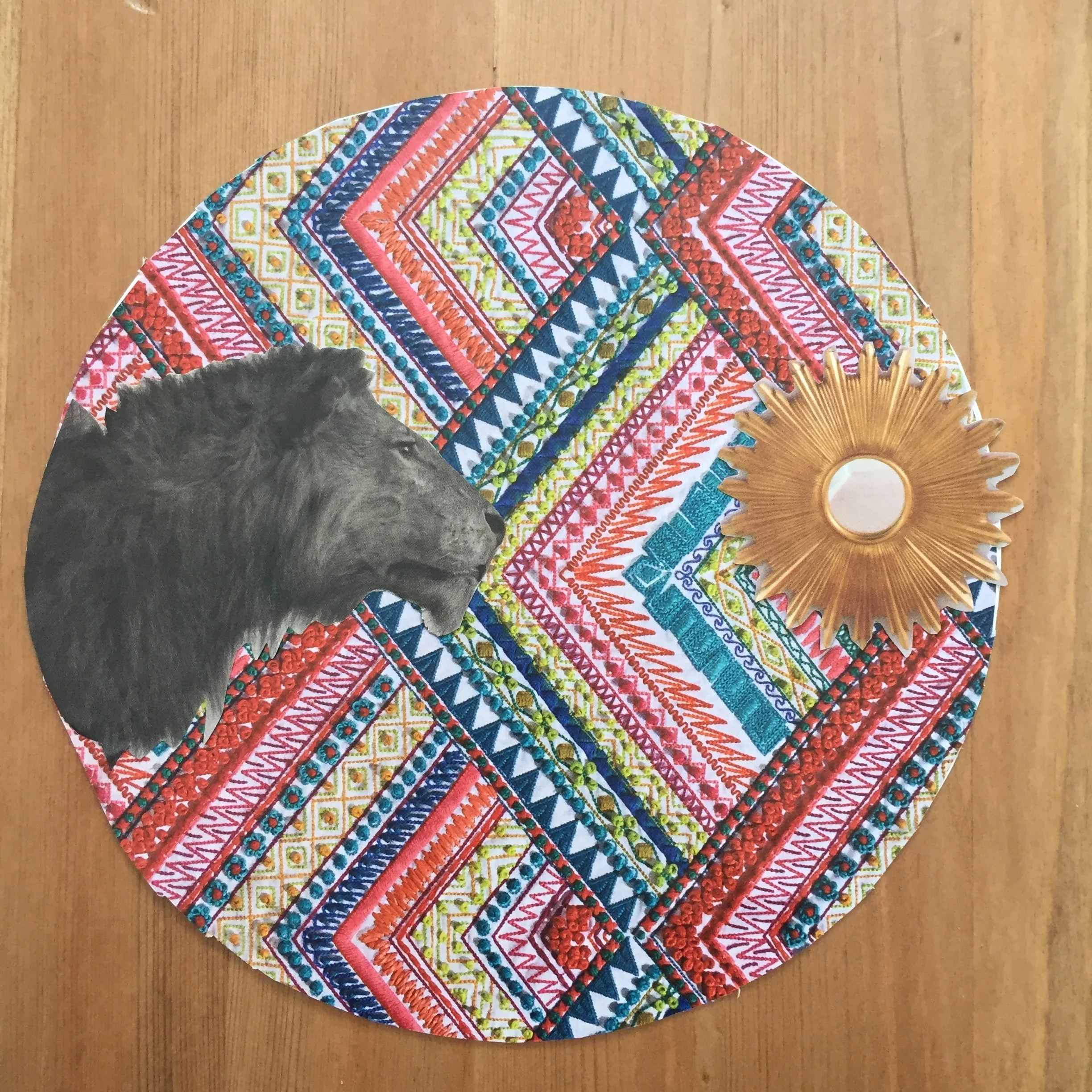
New Kama Mandala Collage
“I'm just an individual who doesn't feel that I need to have somebody qualify my work in any particular way. I'm working for me." —David Bowie
Yogic wisdom believes that the soul has four distinct desires or purushartas. According to Rod Stryker, author of The Four Desires, they are “dharma, the desire to become who you were meant to be. It is the longing to thrive and, in the process, to fulfill your unique purpose; it is the drive to fulfill your destiny… artha, the desire for the means (such as money, security, health) to help you fulfill your dharma… kama, the longing for pleasure in any and all forms, [and] moksha, the desire for spiritual realization and ultimate freedom; it is the intrinsic desire to be free from the burdens of the world, even as you participate fully in it.”
Getting to know these four desires more intimately will better support our intention, resolution or goal, known as a sankalpa—a desire formed in the heart, in service of our unique and individual purpose. When this intention comes from the core of our heart, rather than the mind it has a much better chance at being successfully accomplished.
The 4 Desires Collage Mandala
Mandala is a sanskrit word that means circle, or circular. Circles have been depicted in many cultures as an archetypal symbol of wholeness and continuation as well as a vessel. Carl Jung called the mandala a “magic circle,” where one places that which is to be protected or held as sacred.
As we take these next few days to create these mandalas, we want to remember the sacredness of the process as we create. The difference between making a collage and creating a mandala is the bhavana or the intention you breathe into its existence.
Supplies you will need for the next couple of days:
- Paper, poster board, or cardboard
- Scissors, or X-ACTO blade
- Glue
- Magazines, images, old cards
- Embellishments, glitter, string, fabric, cord, etc.
- Compass or bowl to make your mandala.
Please watch the tutorial on collaging and read the steps below for some tips and ideas before starting.
Password to Collage: icaniwillimust108
Today and tomorrow we will work on our first collage mandala: Kama.
Kama has been coming up for me a lot, and because this group focused on exploring creativity it’s a great place to start.
Kama—the desire to see and experience beauty, sensuality, sexuality, intimacy, great joy, playfulness, and delight.
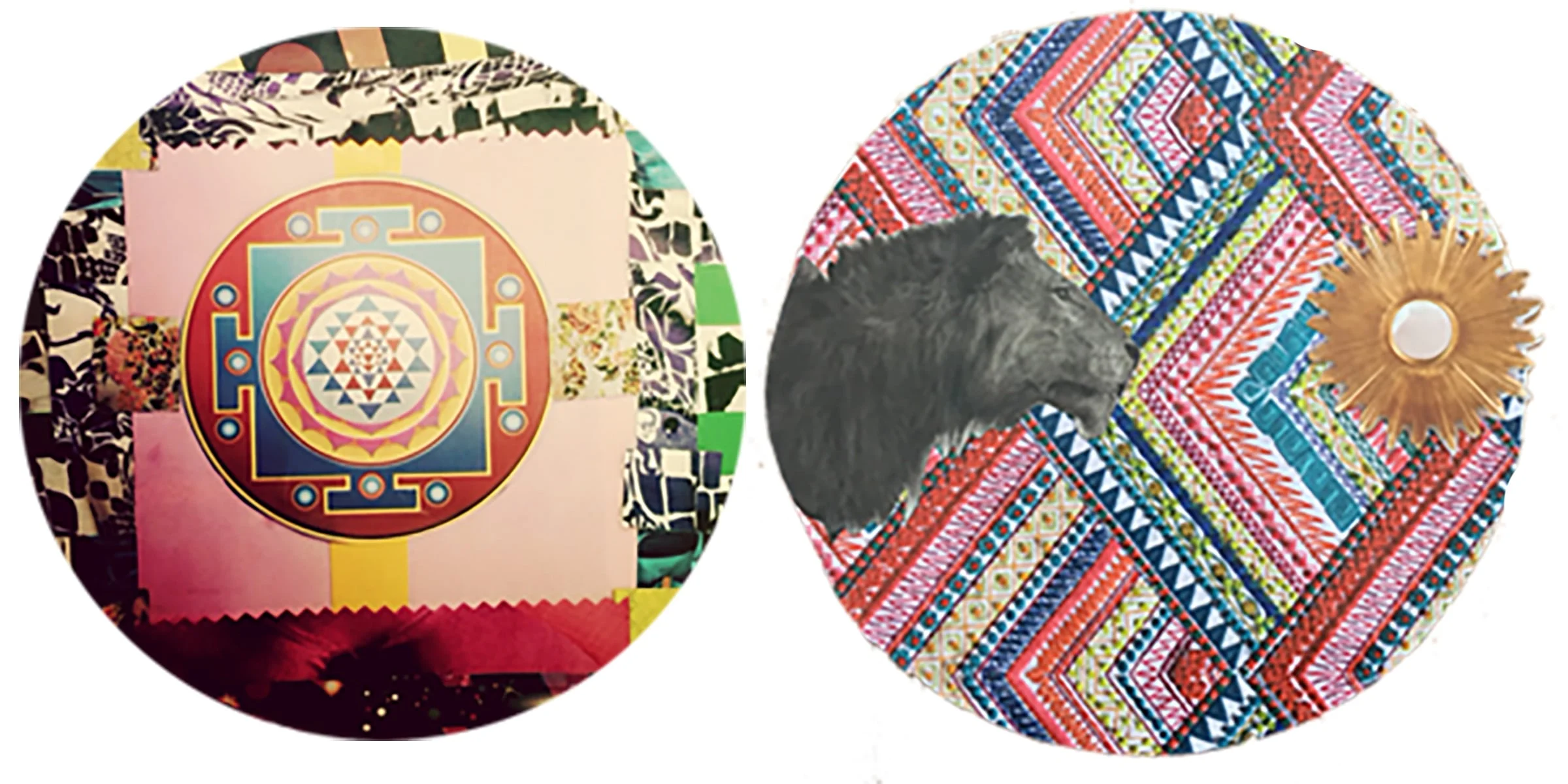
- Get all your supplies ready, or at least what you anticipate you will need. The basics are:
- Take some time to answer the Kama exploratory questions (following) for yourself. You can write them down or just sit with them for a bit and activate the feelings of kama within before you start your collage.
- In your sacred space, close the eyes and turn inward. Remembering the answers and feelings that the questions brought to the surface.
- Scan through the magazines, and pull out the images that you are attracted to without thinking about how they will fit together or if they make any sense. Let the images speak to you.
- Cut out your circular mandala from the paper or cardboard. You can choose a bigger or smaller circle depending on the images you chose.
- Look through the images and decide which ones are most important and expedite the feeling of beauty, intimacy, love, passion….kama—how you taste the sweetness of life.
- Make fine cuts on the images you have chosen.
- Arrange them inside your mandala to tell the story of what kama means to you. Essentially you are creating an image definition of kama.
- Glue the images within your mandala.
- Write any thoughts, ideas, other images or references that came up throughout the process. Like I mentioned in the tutorial, I like to keep my journal next to me while I am creating for two reasons: firstly, to jot down anything that comes up, and secondly, to write things down that will distract me or pull me away from creating. Sometimes I remember I have to finish the laundry or call someone.If it’s going to distract me and it’s not urgent, I write it down to do later.
- Give thanks for the time in your sacred creative space, and add the collage to your altar.
Kama Exploratory Questions
Where do you find or experience beauty, community, friendship and enjoyment?
In what ways have your actions, thoughts, and speech brought you joy?
How do you celebrate life and taste the sweetness of delight?
When do you feel pleasure?
How do you experience intimacy?
Day 3: A Creative Reminder: Altar Piece
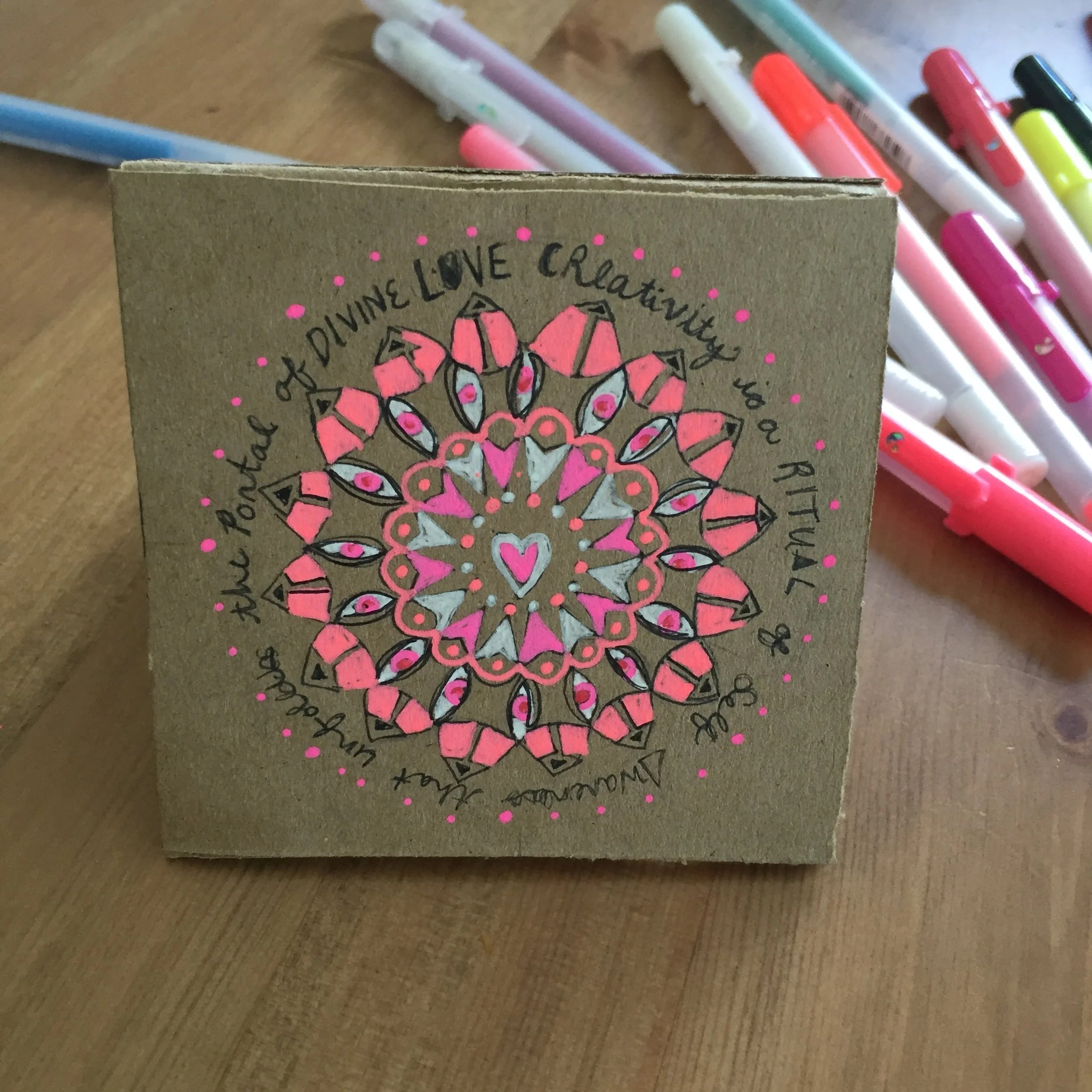
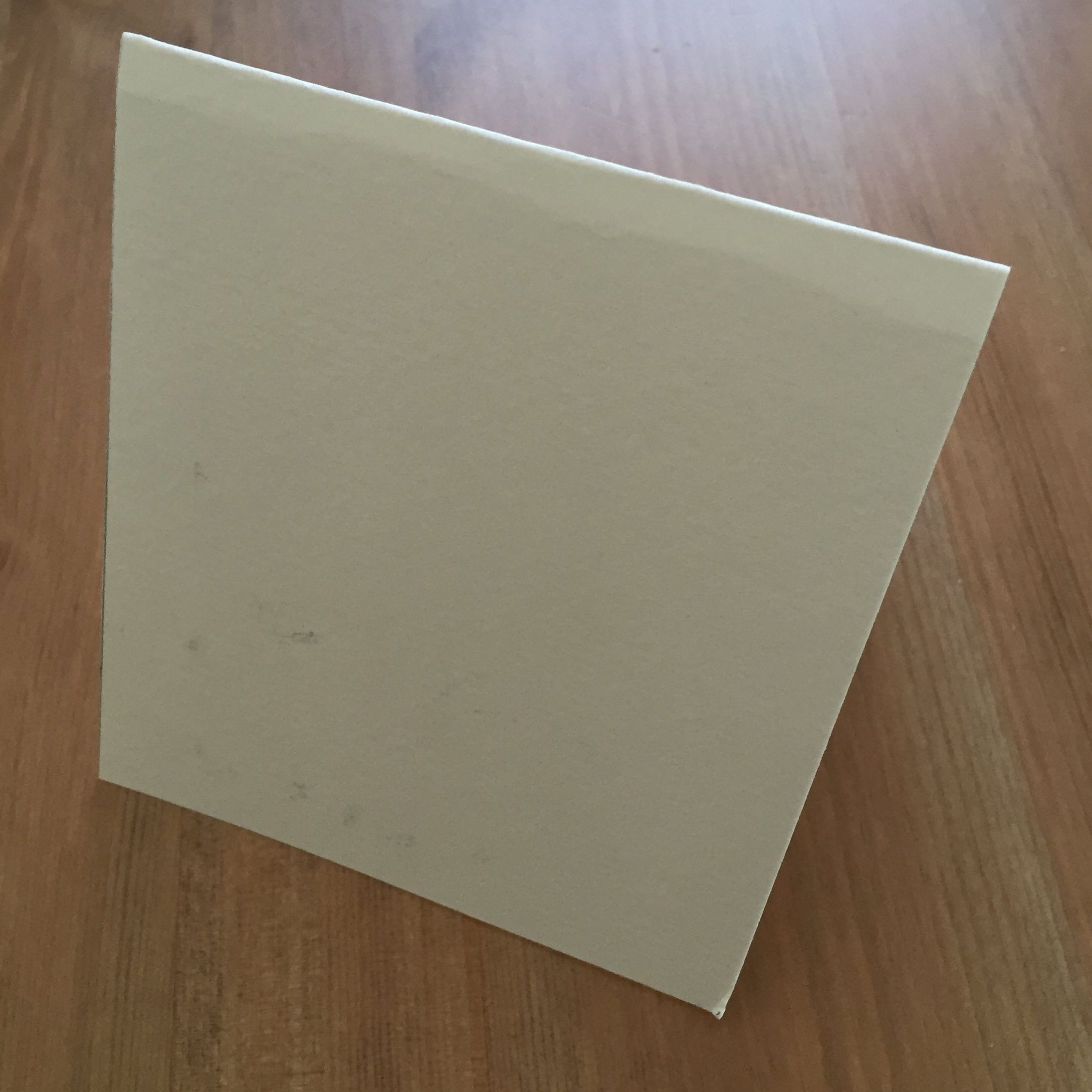
This is an 3 x 6 piece of water color paper folded in half, standing up on it's own.
Today is a simple day. Take your definition of creativity and make that an altar piece to keep as a reminder of this process.
If you, like me, are a more visual person and you struggle with getting the right words, then allow your definition to be more fluid, or consider it a working definition. It doesn’t have to have a period at the end and can be as long or short as you need it to be.It should however convey in language a reminder of creativity. Symbols, images and pictures hold feelings, intentions or bhavanas. Words are how we communicate those images to each other, and to ourselves. On the other hand if you are more comfortable with words, then add to those words an image or symbol of what the word-definition is evoking—we are aiming for a balance of image and word.
I want to keep these first few projects simple so that they can be accomplished in a few minutes, or can be elaborated when there is more time. Whether you have 5 minutes or 5 hours, you should be able to create an altar piece.
Making your Altar Piece
There are a few ways to go about making your altar piece.
A simple version is to get a piece of water color paper, bristol paper, or heavier stock printer paper, cut it to the dimensions you like and lean it up against something on your altar.
You can also take paper or board and fold it in half and stand it up that way.
The version that I have suggested is using cardboard, which you can substitute for whatever paper you like as long as it’s thicker than regular printing paper.
I made my altar piece on the smaller side, since I am working with a traveling altar, but feel free to use whatever size you prefer.
"Tribal peoples are usually careful to keep their sacred altars movable, their architecture vernacular, but their visions otherworldly."
—James Hillman
Suggested Supplies:
-A 3 x 6-inch piece of cardboard (I used a piece of an amazon box)
-Ruler
-Scissors and/or X-ACTO blade
-Piece of fabric or cord
-Glue gun or stapler
-Pencil
-Markers, paints, glitter, embellishments.
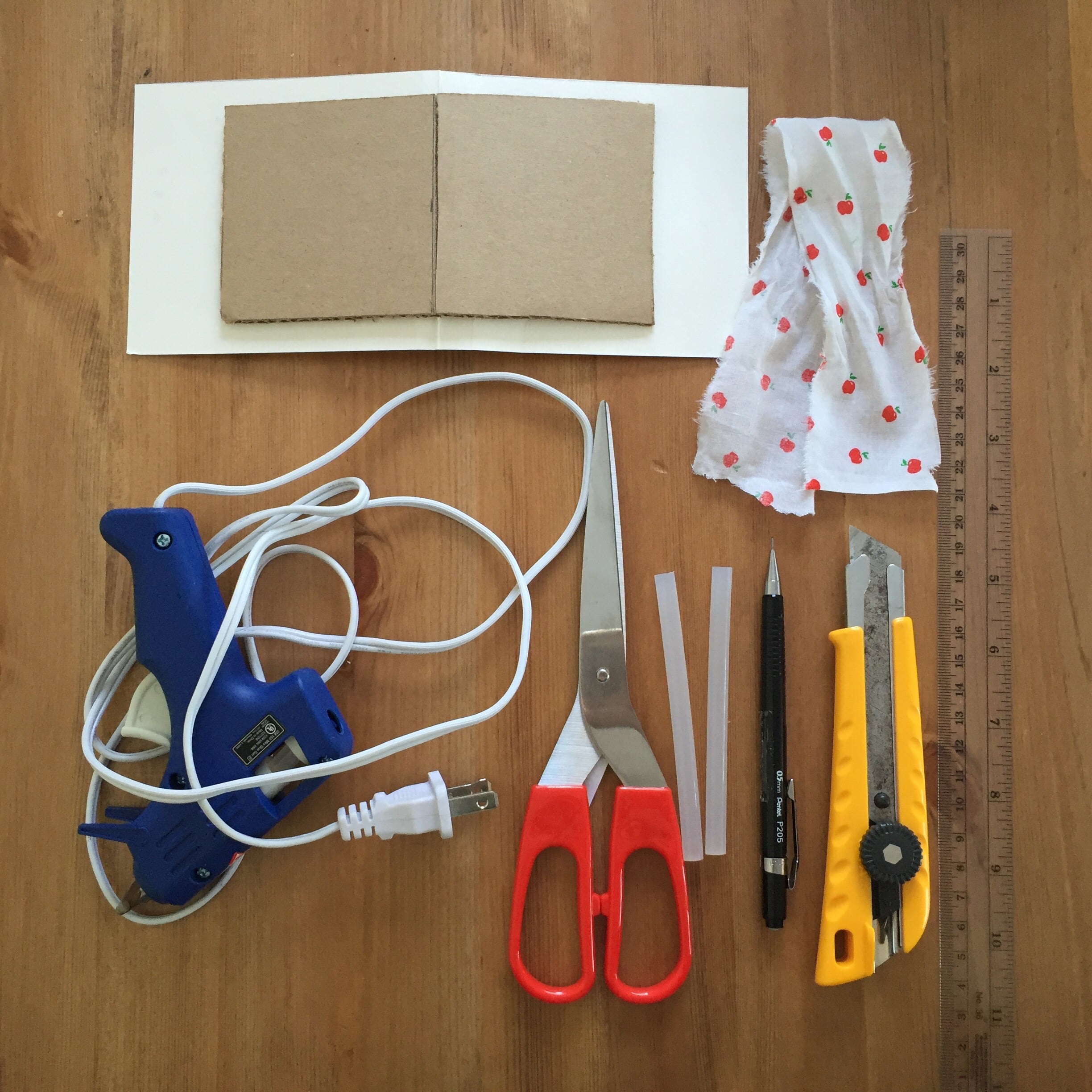
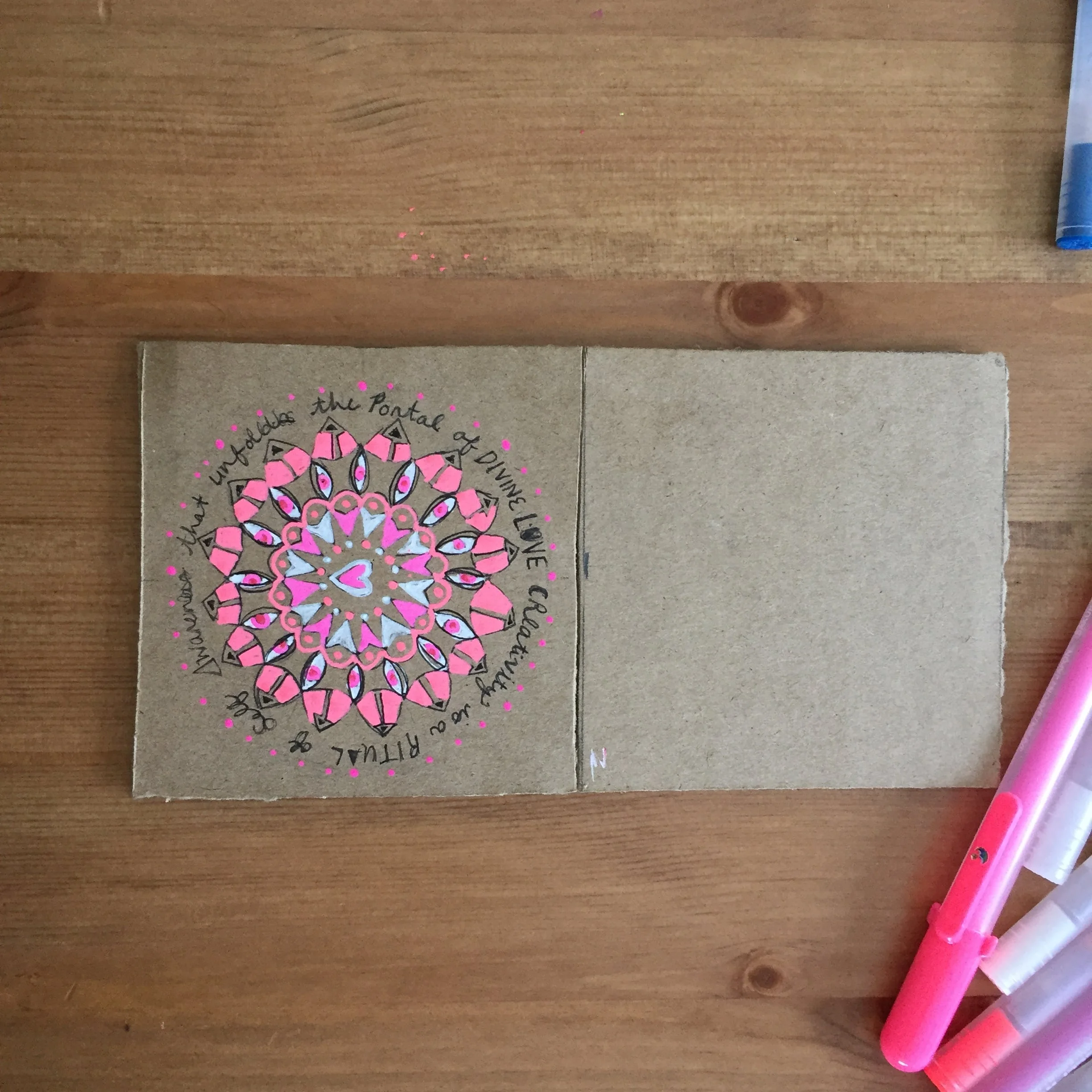
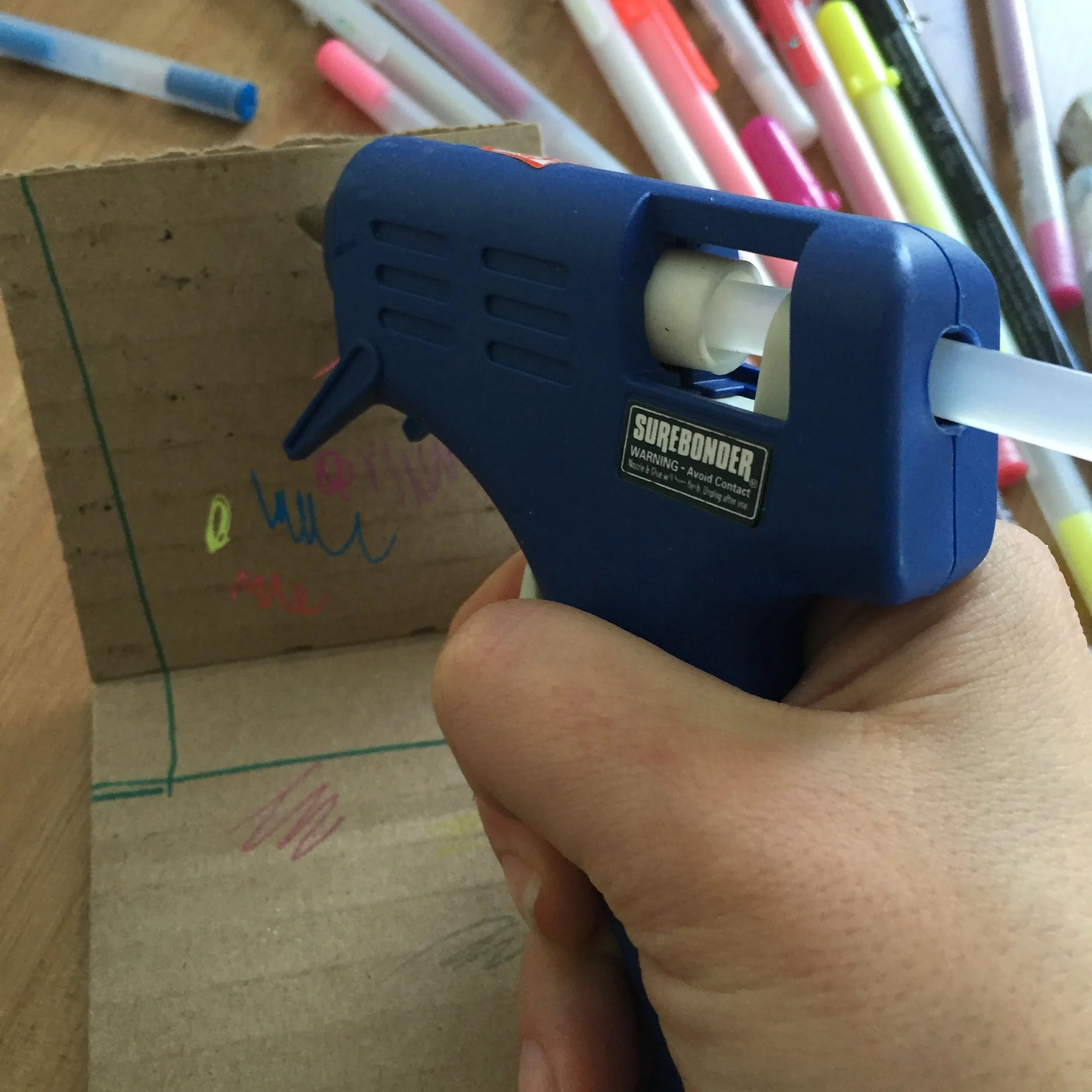
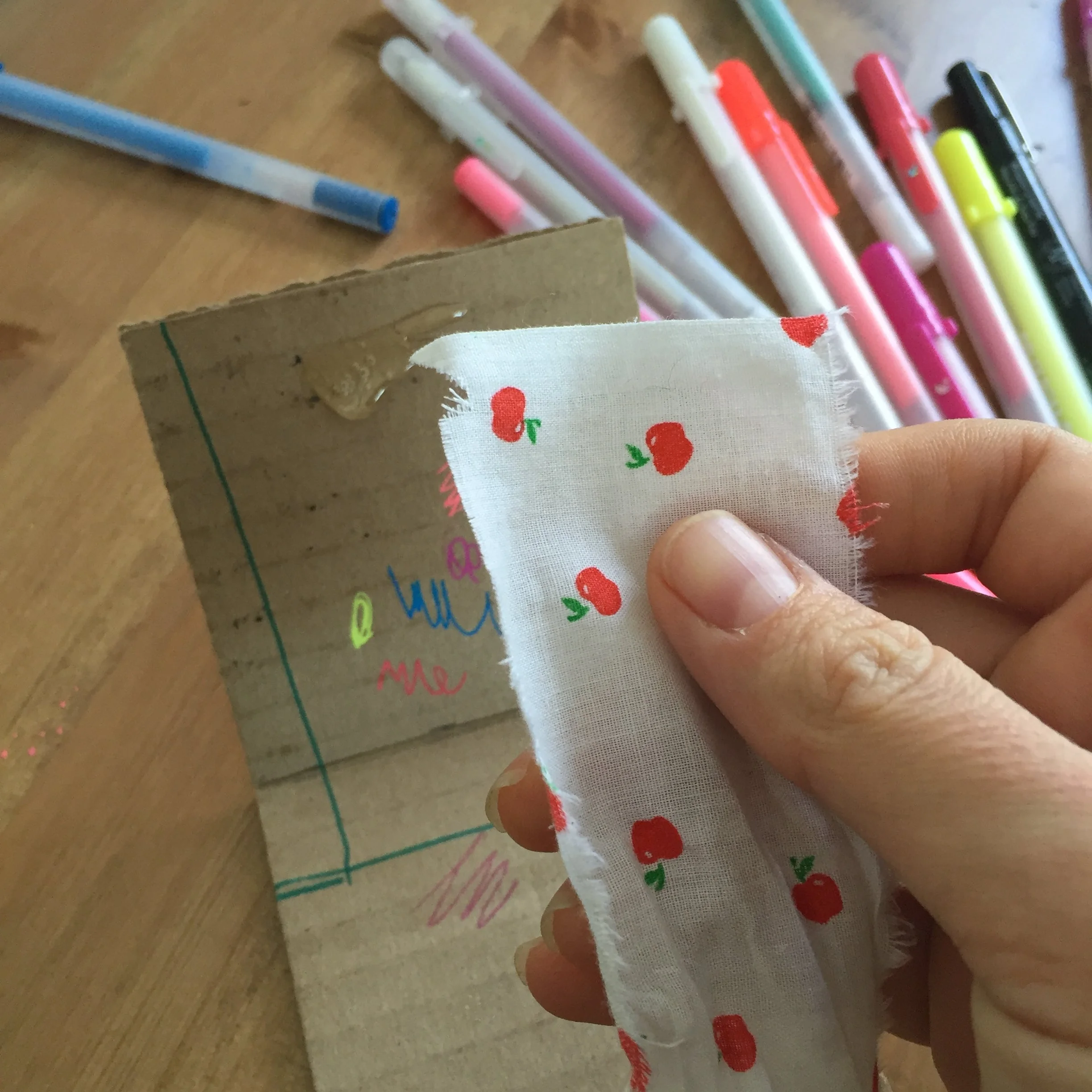
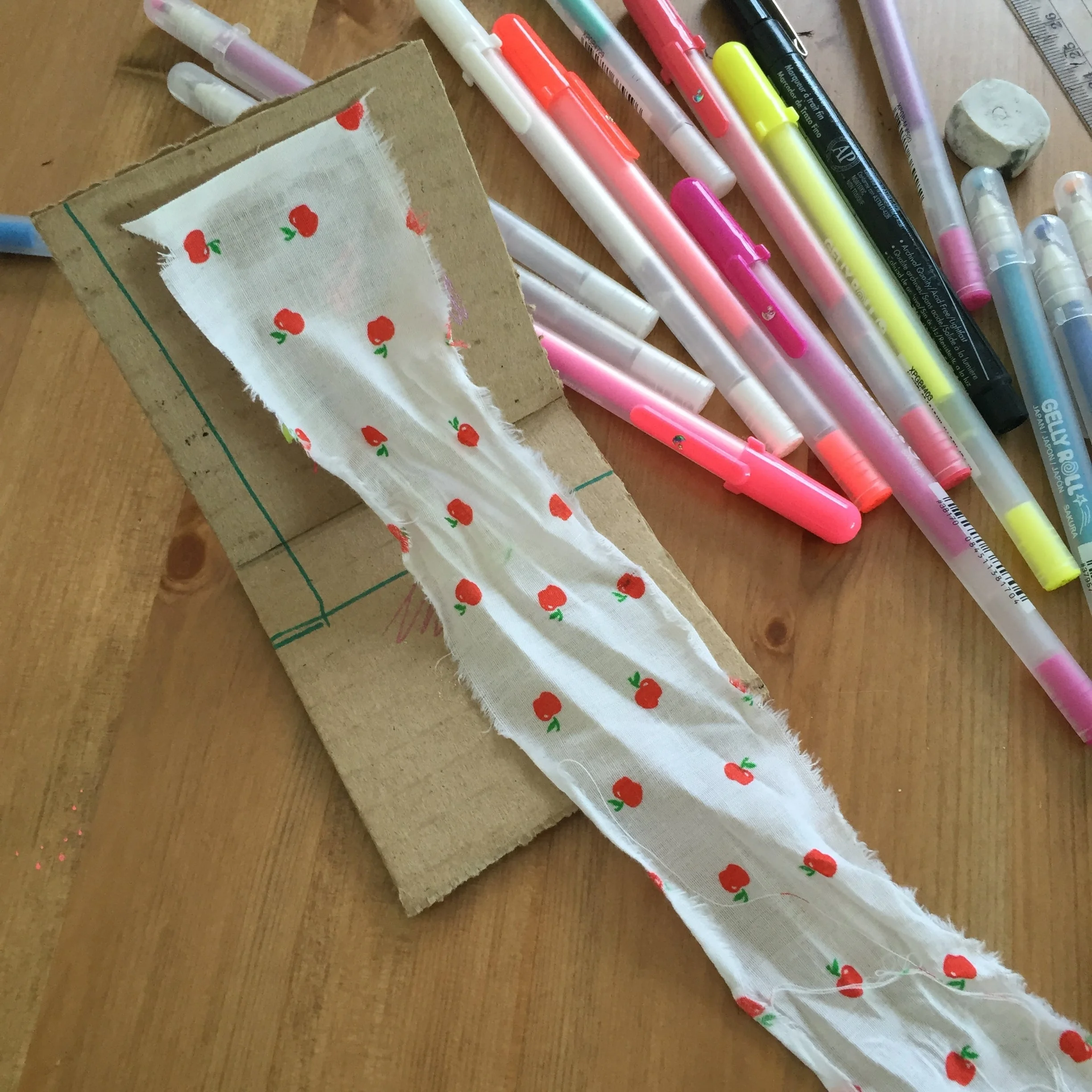
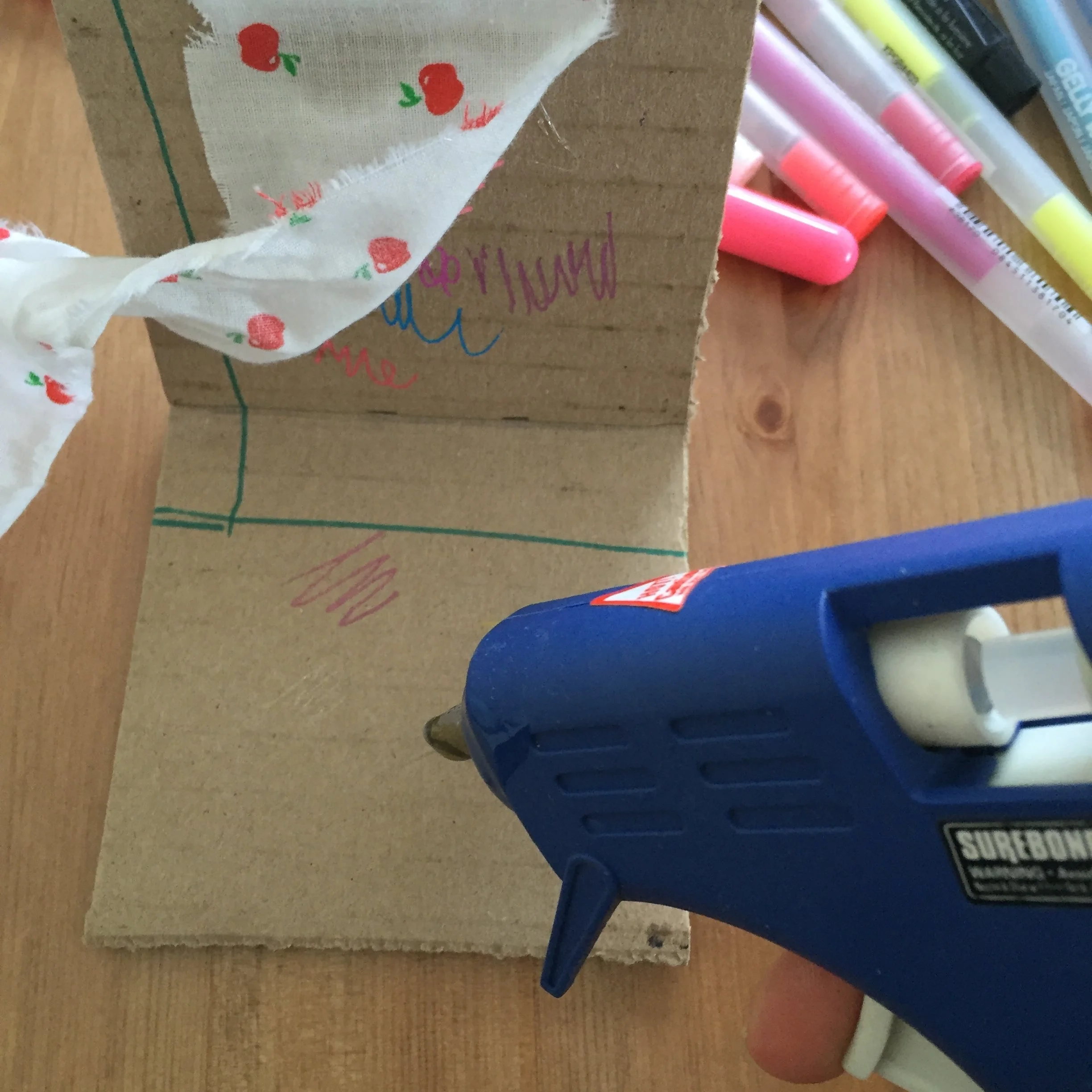
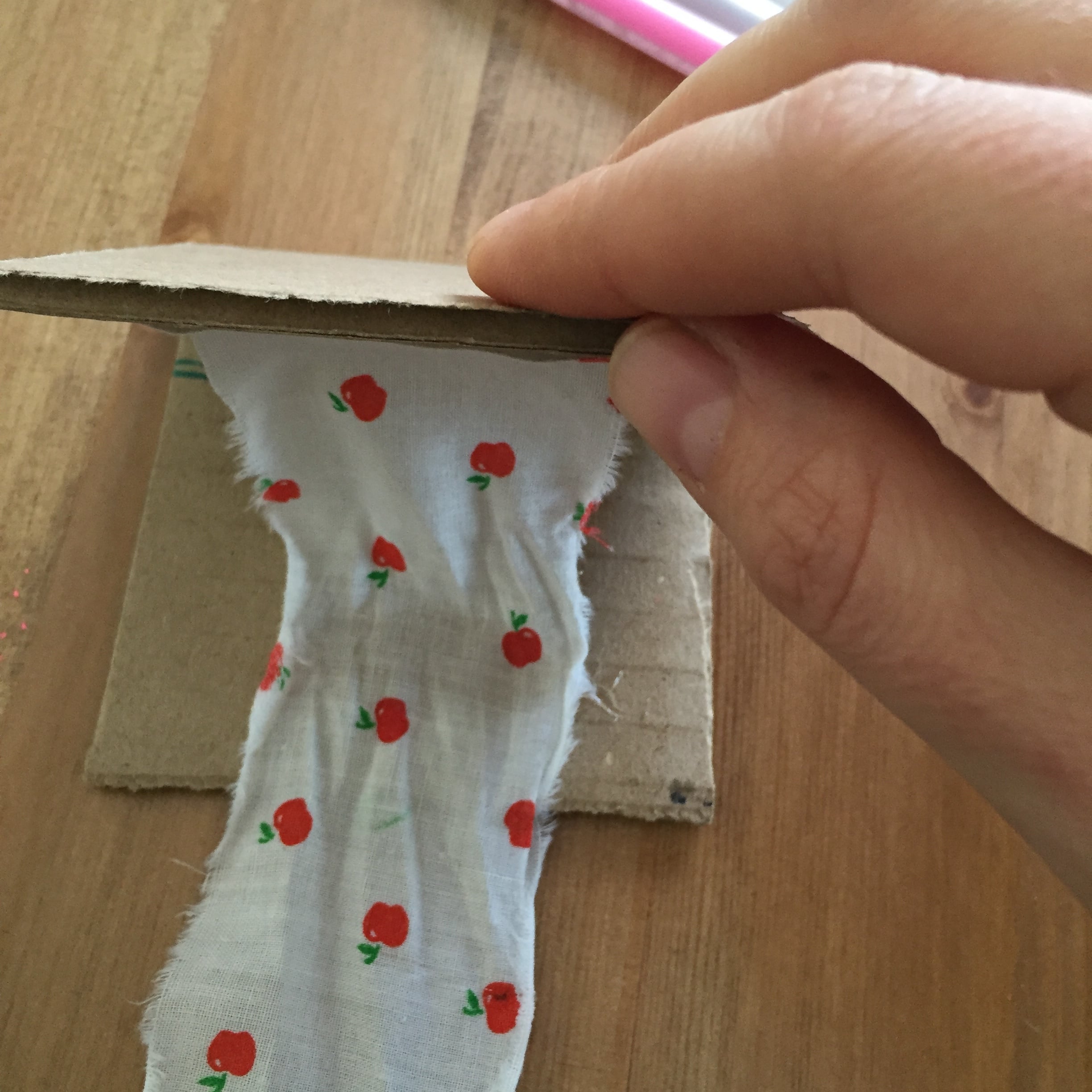
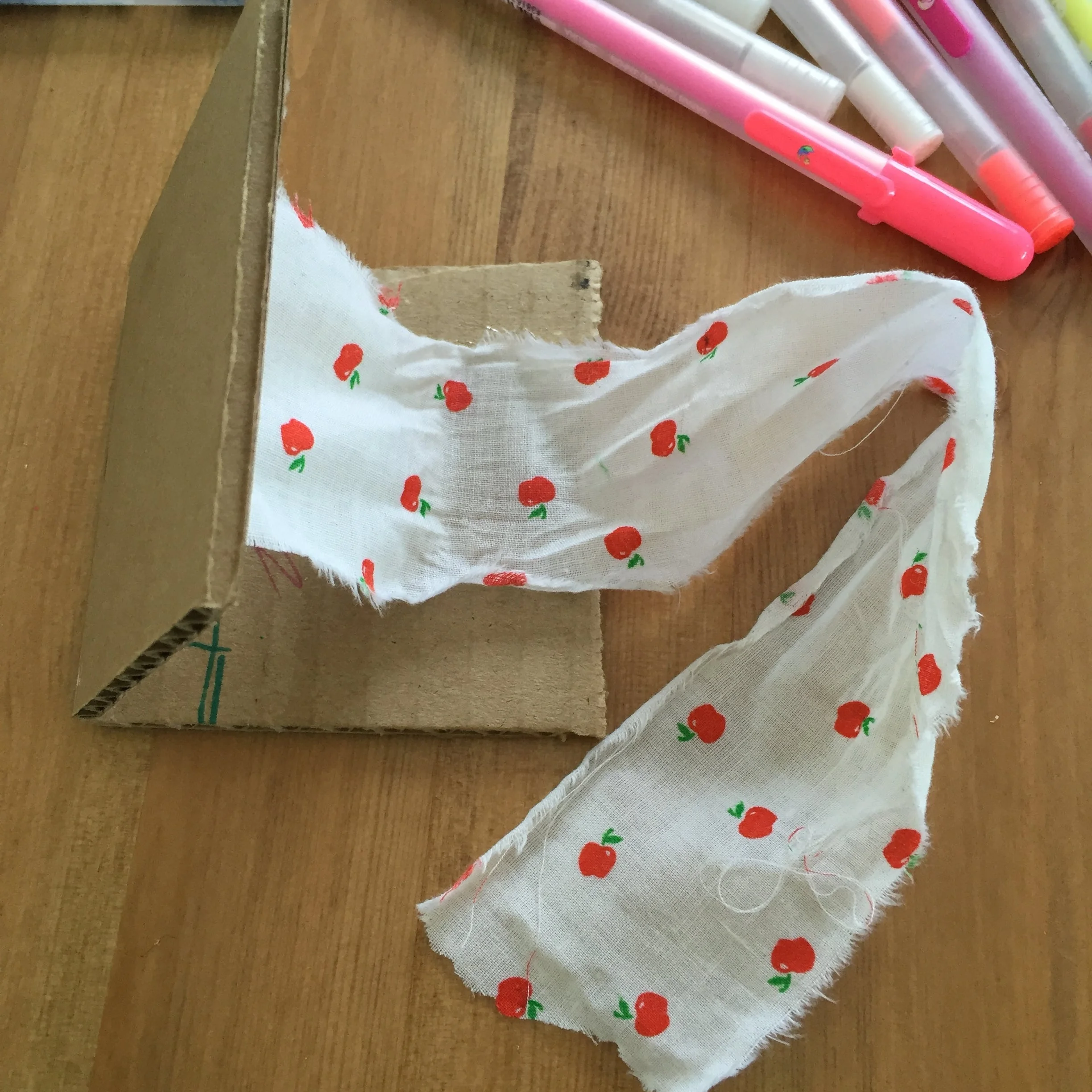
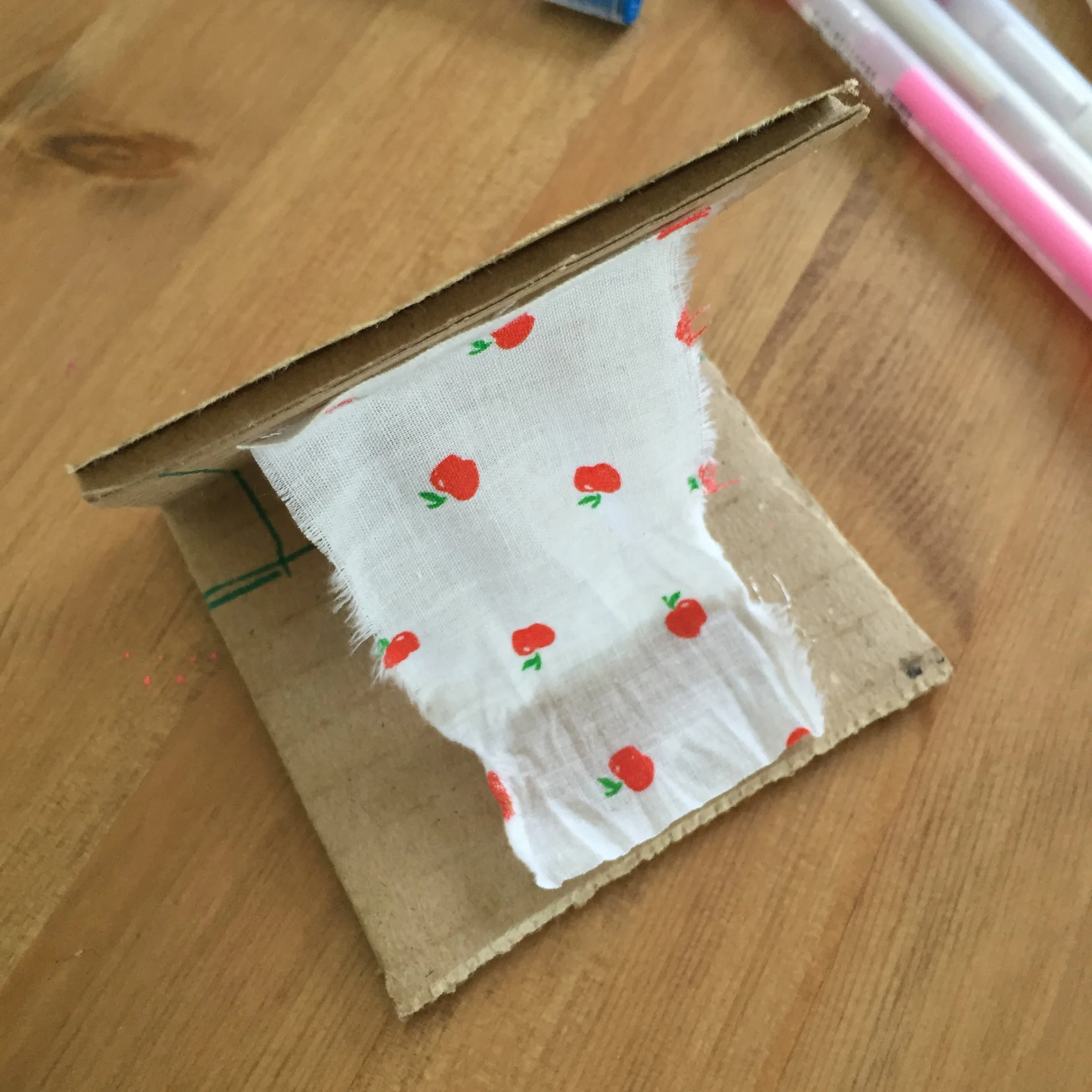
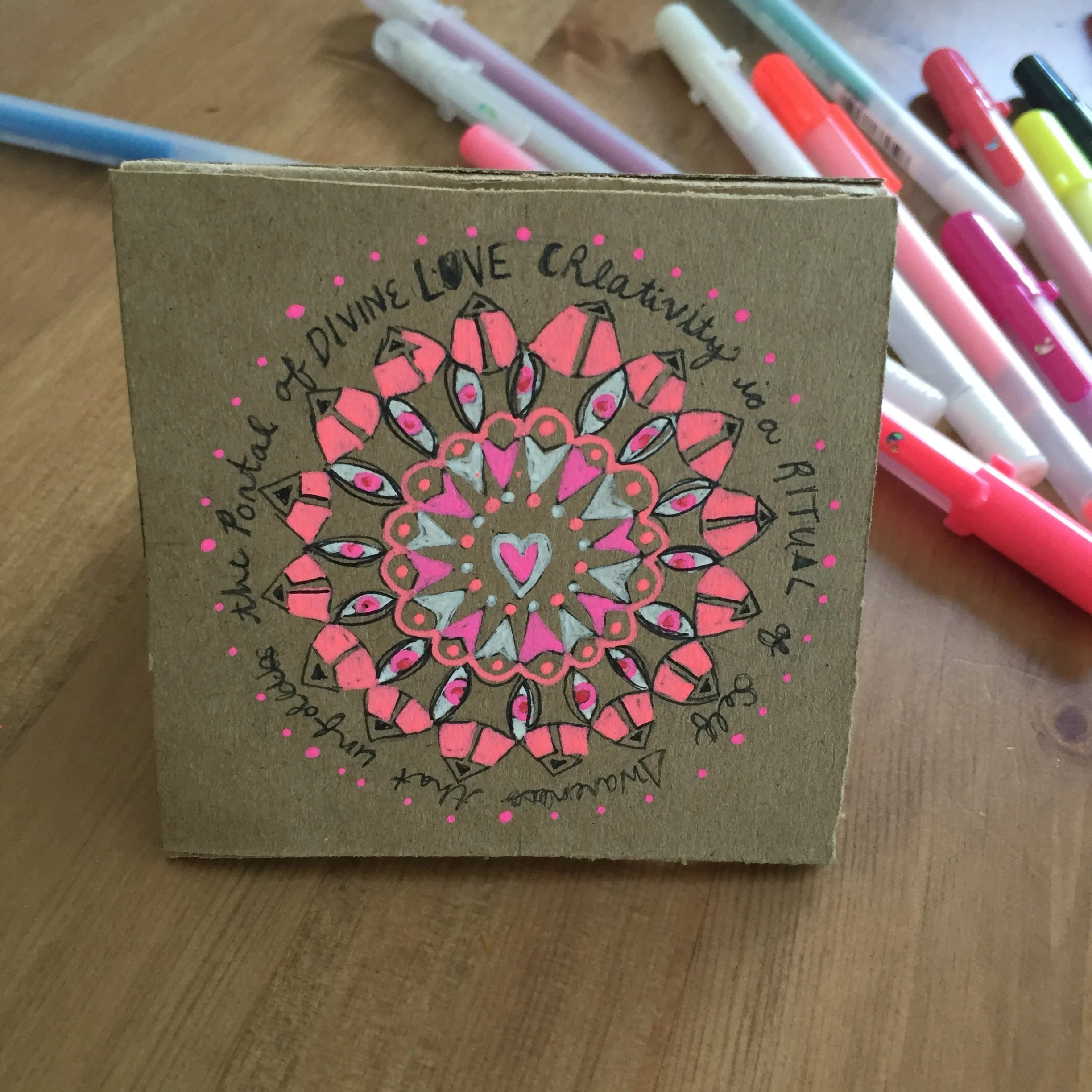
Here are the steps that are also part of the slide show above.
- Cut your cardboard, and either fold it or make a small incision to fold easily.
- Draw, paint, and let your creative definition flow from heart, to hand, to page. Allow for drying time if you are using paints or anything that needs longer drying times.
- On the inside (bottom) of your cut cardboard, spread some of the hot glue.
- Attach one end of the fabric or cord (if you don’t have a glue gun, you can staple your fabric). Press, hold and wait to make sure your fabric is glued before continuing.
- Add more hot glue on the other side.
- Decide how you want the cardboard to stand up, and then glue the piece of fabric to the other end.
- Trim the fabric, and stand up your altar piece.
- It should hold sturdy.
- Add it to your altar!
Day 2: Your Sacred Space
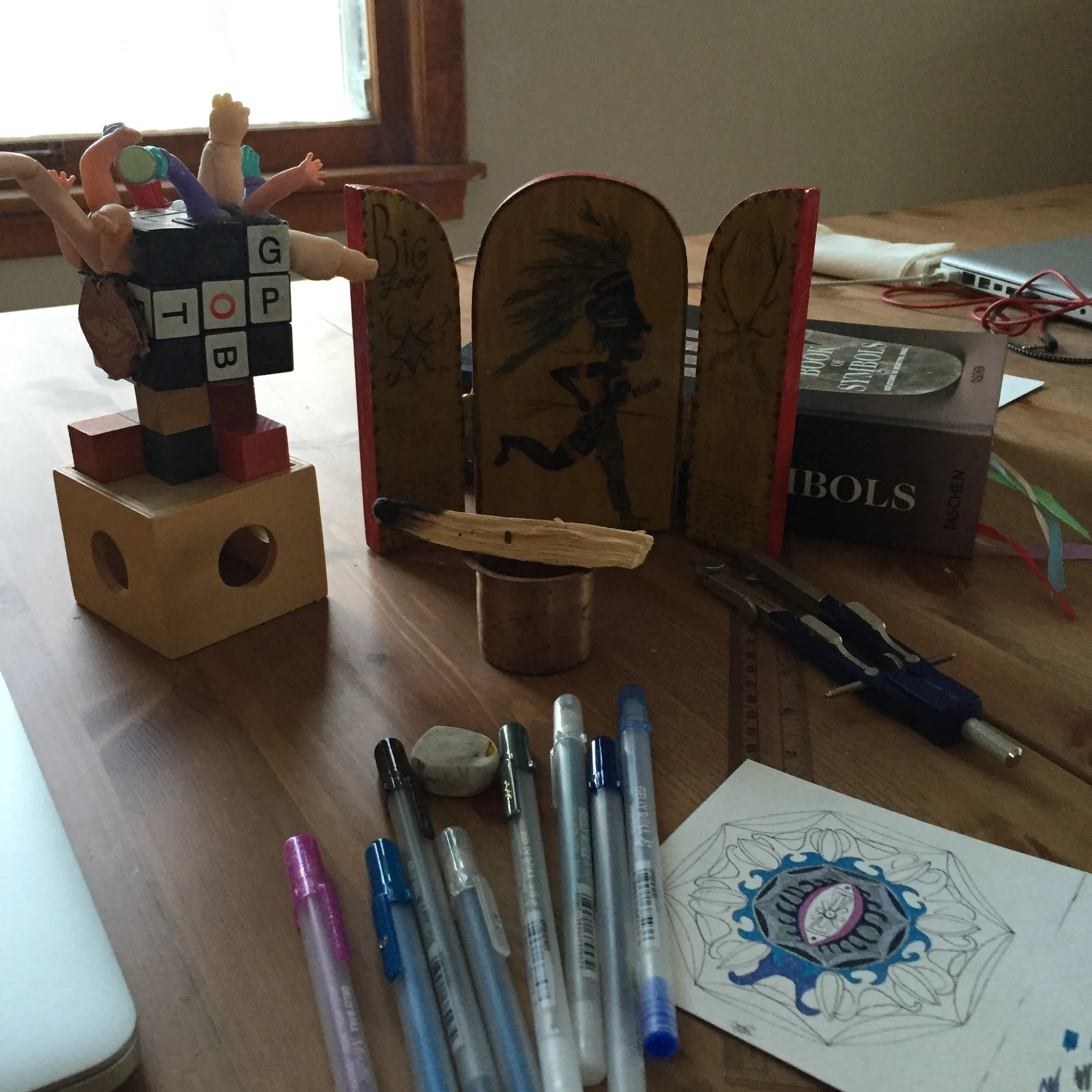
Today you can aim your creative force towards making a sacred space for your creative energy to flourish. My suggestion is to either pick a place you know will be conducive to your creativity or make a “traveling altar.”
This past summer I took a longer-than-expected road trip searching for a home. Having a traveling altar supported my practice, work, and long hours in the car. It was nothing elaborate, containing the 5 elements (of course you can get as elaborate as you like).
Building a traveling altar/ sacred space
Using your intuition gather 5 objects (which you already have), each representing one of the five elements. Some examples are:
Earth- a potted plant, stone, rock, gemstone, or a deity if you have one;
Water- the water you add to the plant, a vessel with water, water from a sacred place;
Fire- a candle, matches, something that for you is symbolic of fire;
Air- incense, feather, the flickering of the flame;
Space- a painted egg, a tray that holds all your elements, or the box that you keep these elements in if they are “traveling.”
As you place these items in your creative space, have the feeling that you are calling on all the elements to support you in this creative journey. Like any sacred space, those objects eventually become charged with their surrounding energy, which means that you can call on those objects as a reminder on the days when you are not be in the “mood” to create..
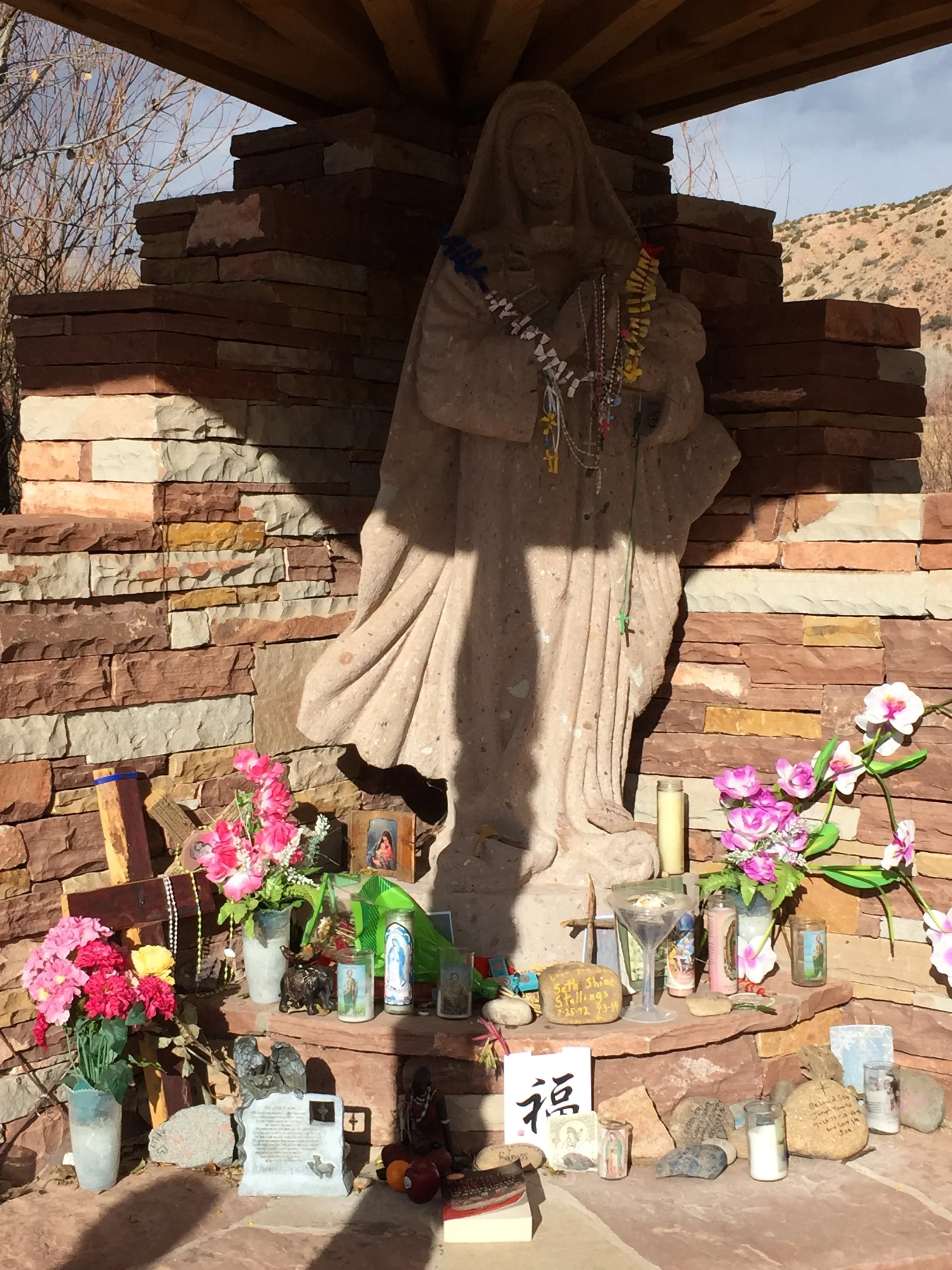
Santuario De Chimayo, New Mexico
Similarly, temples or holy shrines have a certain feeling, conducive to meditation, contemplation and reverence. We want to charge our environment and those objects to hold space for our creative exploration.
Since Jupiter, my new puppy, arrived, all my creative work is getting done on the dining table and so I have created a traveling altar, with the elements as well as some much needed archetypal reminders! As we journey onward our sacred space will be blessed with ritual, dedication and our creative force!
As an aside, I just want to add that at times the altar calls me towards it to create, but often I have to physically put something on to help me to switch over roles —from cooking, laundry, and teaching towards the embodiment of creative energy. While painting I usually put my apron on, while writing requires a special pen. Recently during the preparing for this course, I wear my creativity cloak. These are just little games I play to keep me from constantly being distracted, and they work!
Aim your creative force,
Chanti
Day 1: Welcome to the Creative Explorer Tribe
I like to begin each creative endeavor with the understanding of creativity and how it’s a journey rather than a final destination. It is my hope that you all start to step into something new and lively: a magical island where possibilities are everywhere. You only need to reach out!
For many of us, our conditioned way of living expects us to excel at everything we do, this limits the opportunity to explore. I invite you into this tribe as a creative explorer searching for what your soul desires!
It’s All About the Process
Creativity has many forms with neither beginning, middle nor end. She is formless, open, expansive––divine. However when trying to capture the energy that moves creativity, or in this case when asked to receive a part of it, creativity moves through us picking up little parts of who we are, as well as who we think we are (at times). Who we are creates unique, expressive, beautiful, interesting work, whereas who we think we are (at times) has skillfully learned to block, edit, suppress and push creativity away. Creativity does not strive for a finished product, yet it desires to be invited in, to co-create and experience divinity (how ever you like to define that). Creativity is all about the process, and the process requires your participation.
There are two creative hiccups that sabotage any creative process: “not enough time” and “i am not an artist.
The Creative Hiccups- Why we don’t begin to receive and play with creativity.
“I don’t have time!” We feel affected by time because we don’t believe that we have the time we need. If we did believe in our time, it would be easier to enjoy the journey rather than focus on the end-results. No doubt, checking the box or crossing tasks off the to-do list(s) are satisfying and can give you the feeling of accomplishment, but know that creativity is always there, you just have to invite her in.
My suggestion is to do as much as you can––engage with the process, and call that enough. It's similar to the hurdles that appear when beginning to cultivate a personal meditation practice––we won't sit unless we have a cushion and a long time allotted without distractions. Unfortunately the reality is that if we wait for everything to be “in order” we will never meditate, we will never create, and we may lose the opportunity to connect with the mysterious-unknown-magical-divine.
For my master’s thesis I had no choice but to move into the chaos of my life in order to create. I thought I would have the luxury of my new home, in my new state, surrounded by all the necessary books. None of that happened. Instead I spent three weeks in a lovely cabin surrounded by redwoods without internet, which meant that I sat at Starbucks for about 8 hours a day and then drove to Office Depot to print out each night. It may not have been romantic nor practical at all, but it was one of the most creative times of my life, where I felt closest to creativity, love, beauty, and the pulse of accomplishment running simultaneously through me.
I tell you this story because no matter where we are or what we are doing, creativity is a force that wants to collaborate with us. She doesn’t care if we have cleaned up the house, or still have a load of laundry to finish, she is ready!
“I have no artistic skills.”
I, like the late Irish poet John O’Donahue, believe that we are all artists. O’Donohue said in an interview that “everyone is involved whether they like it or not in the construction of their world. So, it's never as given as it actually looks; you are always shaping it and building it. And I feel that from that perspective, that each of us is an artist. Secondly, I believe that everyone has imagination. That no matter how mature and adult and sophisticated a person might seem, that person is still essentially an ex-baby.” It’s interesting that when creativity is involved there is a tendency to turn away, to not care, or give ourselves very low expectations so we don’t fail. This you may notice is like when children play: they don’t turn away, they have the ability to adapt and let go. It isn’t that they don’t care they are just not attached to the results and they fail all the time, yet they continue to play.
You don’t have to call yourself an artist, but begin to explore the word creative. “I am a creative,” embodies the spontaneous, exploratory, quirky, awkward and playfulness of children seeing the world with fresh eyes. You have all turned towards creativity already, however sometimes fear makes an appearance because creativity may be that one place where our authentic voice shares the treasures of our soul. Maybe some of you have just begun to relate to that part of yourself, others may not want to show this side because it's fresh, gentle and raw. I invite you to our sacred circle to share that beautiful, curious, creative person you are, in whatever capacity you are comfortable!
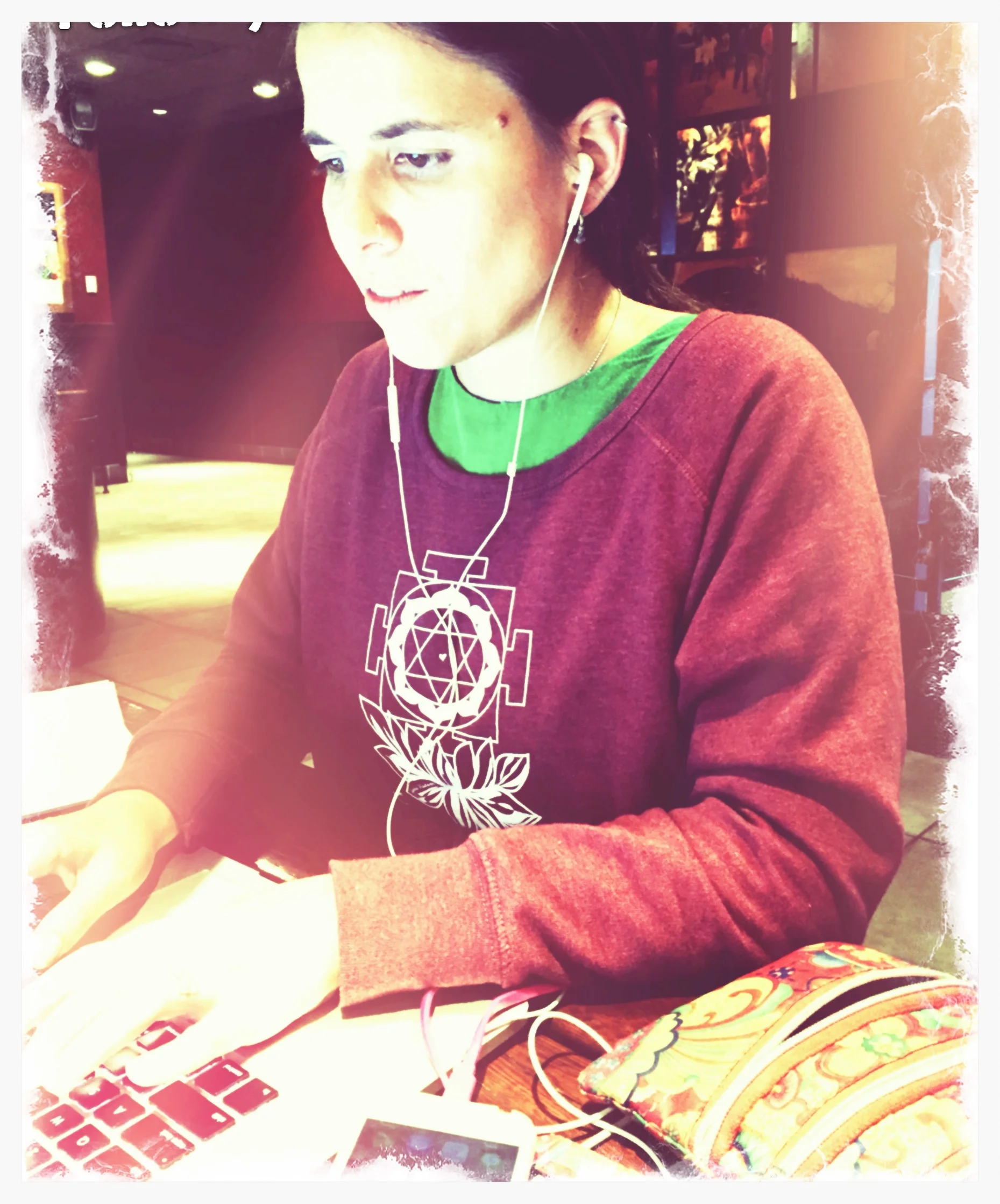
My husband took this picture (at Starbucks), and sent it me as I was working, "Follow your Dhi" made me laugh.
DAY ONE—Engage with Creativity
Write out your own definition of Creativity. Think about what it looks like, feels like, smells like and tastes like, to get you writing. Your definition can be as short or as long as you like; it should inspire you to want to create…. and just like that you have begun to live more engaged and in relation to creativity….Congratulations!
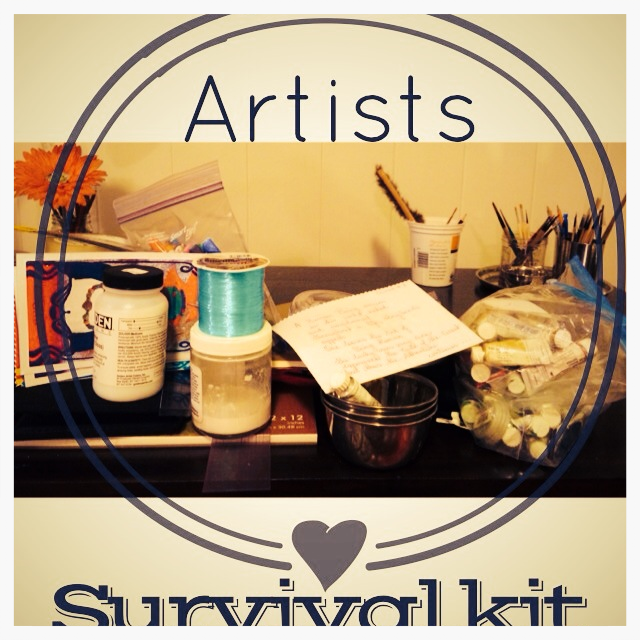
Some supplies to support your creative side.
- It may be a nice idea to have an artist journal or notebook to keep all your projects in, a box or place to store the energy of your 30 days of creativity. This will help to remind you of this creative time in your life.
- A few tools that we will be using (but of course you can use whatever medium you like) pencil, pen or marker, permanent marker, colored pencils or crayons, magazines for collaging, glue, scissors, paint of any kind (I typically like gouache, but you can get a simple set of kids watercolor). Don’t worry if you don’t have these things, sometimes the most brilliant creative moment happens when trying to create with what’s just around you.
- Feel free to post any questions on the Facebook group or in the blog thread (below), as well as send me a message with any questions you may have. I may not have a chance to respond quickly but some great questions may inspire my own offerings to you , and may help inform the tutorials that will pop up every now and then! Please direct your questions or comments to yantrawise@gmail.com
Finally, thank you for joining this creative tribe, it’s an honor to be with you all.
Aim your creative force,
Chanti
#cre8tiveexplorertribe
Lorem ipsum dolor sit amet, consectetuer adipiscing elit, sed diam nonummy nibh euismod tincidunt ut laoreet dolore magna aliquam erat volutpat.