Bounus Day: Yoga Nidra—Effortless Ease
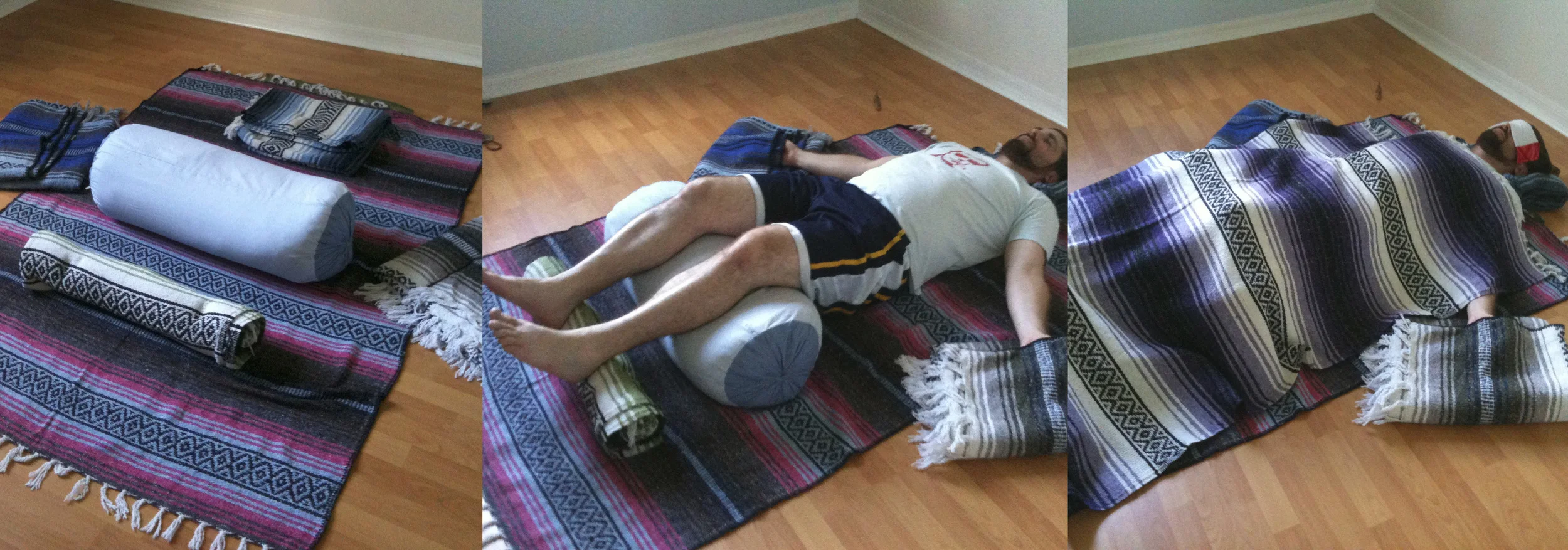
“It is yogic sleep, which means the deepest state of rest with only a trace of awareness.” -Rod Stryker
Yoga Nidra, a.k.a. yogic sleep, is an ancient systematic approach to complete relaxation. It helps you formulate positive feelings surrounding your sankalpa and its effects trickle into the rest of your life. Your ability to reach your sankalpa increases through the process of yoga nidra — when there is deep effortlessness you become more aligned with the power of your unconscious rather than in conflict with it. Yoga Nidra is the process that gives you the tools to peel away all negative associations related to your sankalpa, including doubt.
Practicing this technique helps you gain access to a state beyond both intellect and effort. It affects all aspects of your being: physical body, energy body, mind and unconscious soul. The technique reduces stress and promotes healing while allowing you to access the unconscious.
If you haven’t yet practiced Yoga Nidra, think of it like a long savasana or deep rest where you ideally don’t fall asleep. When practicing, it’s best to lay down in a super supported posture on your yoga mat, with a little extra padding. You can also do it in your bed, but that may lead to a nap rather than yogic sleep. Please make sure you are warm enough: cover yourself, your feet, and eyes with an eye pillow or scarf to keep it dark. If you do fall asleep, don’t worry, everyone has fallen asleep once or twice. The more you practice, the more conscious the rest will become.
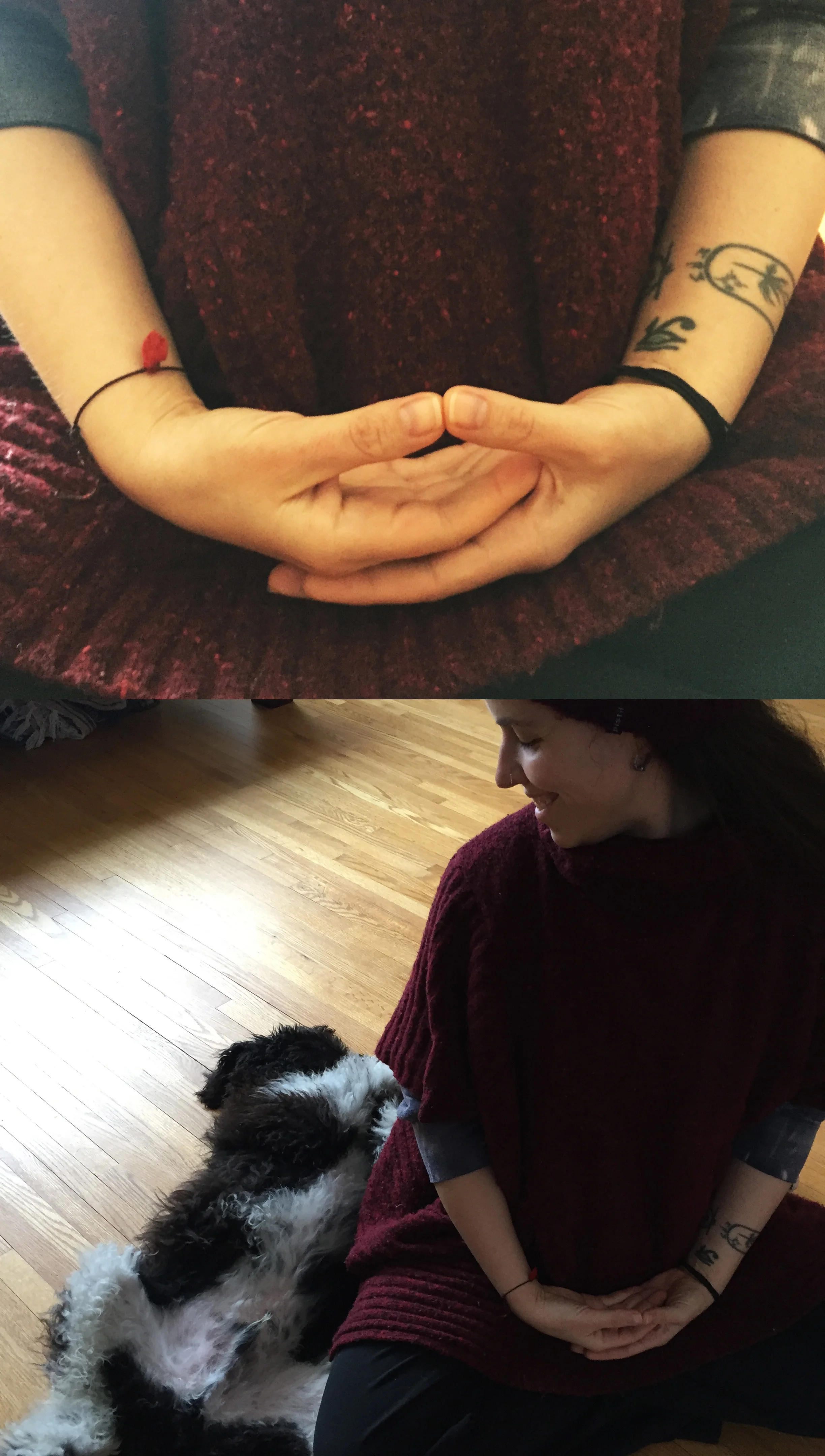
Bhairavi Mudra
At the end of the Garden Nidra practice, I offer this mudra to honor the guiding creative feminine force within each of us. It connects us to the second chakra and the pelvic plexus.
In your lap, place the right palm over the left, thumbs touching, fingers relaxed. Practice approximately 5 minutes.
Accessing the Unconscious
At the beginning of most Yoga Nidra practices there is a space to plant your sankalpa, and then again at the very end of the practice. In this space you want to remember the feelings you wrote about, as well as the creative work you have made to find more clarity around what your resolve looks like once it is realized.
The conscious mind uses words and information as expression, whereas the unconscious expresses itself though feelings and images. With practice, Yoga Nidra has the power to “bridge conscious intentions to your unconscious mind.” (Stryker, 2011) It unwinds the unconscious to seed the sankalpa deep in the loosened moist soil: this way the sankalpa has space to grow and become fruitful.
When practicing Yoga Nidra, remember that this is not a practice you do, but an experience of deep rest. Take some time to nourish yourself with this delicious practice.
I am honored to have shared this journey with you, and wish you all the best in the fulfillment of your intention, goal, sankalpa as the moon continues her ritual. Please know that the lines of communication are open, for added support and on-going inspiration. For those of you I haven’t met in person, I look forward to meeting you in the near future and for those of you who I know, I hope to see you soon.
Thank you again, for being part of this amazing creative mandala, you have all shared your hearts and made a beautiful sacred circle.
Aim Your Creative force—Always,
Chanti
Those of you interested in continuing as a group I will be offering two online check-in’s, this group will be limited to ten students—check it out if your interested, HERE
Please take some time to fill out our questionnaire to continue to make our programs greater!